Interview with Shane Timmons
- Merle van den Akker
- Apr 6
- 9 min read
Updated: May 6

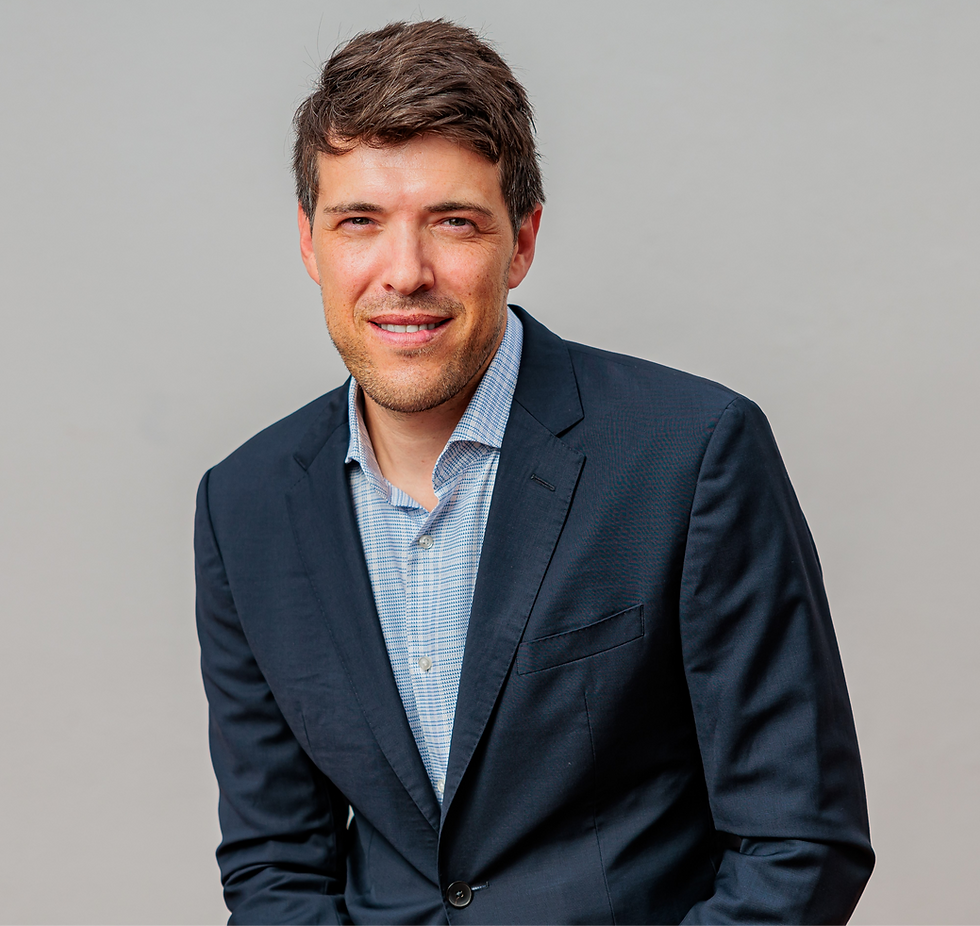
Shane joined the ESRI’s Behavioural Research Unit (BRU) in 2017 as a postdoctoral research fellow and is currently a Senior Research Officer. His research uses theory and methods from behavioural science to inform policy across a range of domains, including environmental behaviour, financial decision-making, and health. A present focus of his research is on how individuals and systems interact in ways that have implications for climate policy. Shane holds a PhD in Cognitive Psychology from TCD, a PG Cert in Statistics and a BA in Psychology from TCD. Prior to joining the ESRI, Shane taught modules in statistics and research skills at TCD, DCU and American College Dublin.
Who or what got you into behavioural science?
I didn’t originally set out to work in behavioural science as such. I studied psychology and then did a PhD in the psychology of decision making, specifically moral decision-making. So it wasn’t a million miles away from behavioural science, but I wouldn’t have used that label at the time.
What really shifted things for me was a talk by Liam Delaney toward the end of my PhD. He came to the university and presented examples of behavioural science applied to public policy. I remember thinking, “Hang on, I didn’t know we could actually do this.” That talk really sparked my interest. From that point on, I started looking for opportunities where I could work in that kind of applied space.
Luckily, around the time I was finishing up my PhD, a postdoc position opened up at the institute I’m still working in now (Economic and Social Research Institute, Dublin). That was just over eight years ago. So in a way, it was a mix of exposure to the idea through that talk, and then a bit of good timing and luck that the position opened up when it did.
What is the accomplishment you are proudest of as a behavioural scientist? And what would you still like to achieve?
A couple of periods really stand out. One was during COVID. It obviously wasn’t a pleasant time, but it was a very intense and meaningful period for the team. We did a lot of work for the Department of Health and the Department of the Taoiseach to inform the national response. It was fast-moving and demanding, but it was also rewarding to see behavioural science being used in real time while still trying to maintain rigour.
In terms of specific projects, one that stands out is a savings intervention we ran with a major retail bank. We made small changes to an application form for a rainy-day savings product and tested it in what became the largest randomised controlled trial ever conducted in Ireland, with over 160,000 participants. We saw a positive effect, particularly among lower-income groups, who were the target. We also looked for negative spillovers, like increased debt or arrears, and found no evidence of harm. If anything, those who used the new form were slightly less likely to hold debt.
But if I’m honest, some of the moments I’m most proud of involve junior team members. Seeing research assistants who were initially nervous present at conferences or to clients and then absolutely nail it is incredibly rewarding. Watching them go on to strong PhDs or important public-sector roles and apply what they learned here - that’s probably where the real sense of pride comes from.
Looking ahead, I can’t really see myself leaving this line of work. I feel quite lucky to work directly with policymakers on real problems, collect meaningful data, design rigorous studies, and communicate findings that might actually influence decisions. One area I’d love to work more on is democracy; issues like misinformation and how people interact with democratic processes. Strengthening those systems feels like an increasingly important challenge.
With all your experience, what skills would you say are needed to be a behavioural scientist? Are there any recommendations you would make?
The field benefits from a varied skill set, but a few traits stand out. Curiosity is crucial, as is enthusiasm, but balanced with a healthy dose of scepticism. You don’t want to be cynical, but you also don’t want to get carried away by excitement and lose sight of rigour.
On the technical side, a solid grounding in quantitative skills is important. Qualitative research is incredibly valuable, but you still need to be able to understand and question statistical results. Coding and data analysis skills are equally very useful.
Communication is also key. You need to understand where policymakers or stakeholders are coming from and present results in ways that matter to them. It’s not just about doing good research; it’s about making it usable.
In general, one thing I’ve noticed is that people who prosper in applied behavioural science tend to be open about the topics they work on. Some people have very specific research interests and want others to pay attention to those. Others are more motivated by having impact and are willing to work on whatever problems policymakers are most concerned about. That openness tends to serve people well.
What advice would you give to young behavioural scientists or those looking to progress into the field?
Beyond the technical skills, one of the most important things is to develop a balance between critical thinking and cynicism. Those two things can look very similar on the surface, but they lead to very different outcomes.
Critical thinking is about being curious, asking good questions, and genuinely testing whether an idea works in a given context. It means being willing to challenge assumptions, examine the evidence, and adapt when something doesn’t perform as expected. That kind of mindset is incredibly valuable in applied behavioural science, because real-world problems are messy and rarely behave the way theory predicts.
Cynicism, on the other hand, tends to shut things down. It’s the attitude that nothing works, that all interventions are naive, or that any attempt at behaviour change is misguided. That kind of thinking can feel intellectually sophisticated, but in practice it often prevents progress. If you assume everything will fail, you stop experimenting, and then you never generate the evidence needed to improve.
So the balance I’d encourage is this: be enthusiastic about new ideas, but test them properly. Be open to the possibility that something might work, while also being rigorous enough to detect when it doesn’t. That combination, optimism tempered by scepticism, is what allows behavioural science to move forward in a constructive way.
I’d also say that if your main goal is impact, rather than advancing a very specific research agenda, you’ll probably find more opportunities and more satisfaction in applied work. Being open about the kinds of problems you’re willing to work on makes it easier to contribute where behavioural science is most needed.
What are the greatest challenges being faced by behavioural science, right now?
One ongoing challenge is that there’s still a lot of confusion about what behavioural science is and isn’t. Many people have fairly simplistic mental models, which is understandable if they’re not working in the field, but it means there’s still a lot of explanation and education required.
Another issue is that not all work labelled as behavioural science actually follows the scientific method. Some organisations might take well-known findings and apply them to a problem without any testing or evaluation. From my perspective, the real contribution of behavioural science is the science: the application of the scientific method to behavioural problems. Without that, it’s not really behavioural science in the full sense.
What is your biggest frustration with the field as it stands?
One of my biggest frustrations is the limited uptake of open science practices in applied behavioural work. Coming from a background in moral psychology and social psychology, I’m very aware that a field’s reputation depends on its credibility and transparency. But I don’t think open science is as embedded in applied behavioural science as it should be.
You sometimes see academic papers with pre-registrations and clear documentation of deviations from the plan, but much less of that in non-academic work. There are plenty of trials or interventions that you hear about, but the results are never published. You don’t know what was done, what worked, what didn’t, or even whether the project went anywhere. Sometimes the details are buried in appendices or never made public at all.
That lack of transparency is frustrating because it limits cumulative learning. The field as a whole would benefit if more people shared what they’d done, including failures. But at an individual or organisational level, the incentives often run in the opposite direction. If you hide work that didn’t succeed, you might look better in the short term, or be more competitive for future contracts.
So it becomes a kind of collective action problem. Everyone benefits if the field is more open, but each individual actor has incentives to withhold information. In academia, journal incentives are slowly pushing things toward more transparency. But in applied contexts, especially private or competitive environments, those incentives just aren’t there.
I do appreciate that it’s harder in some organisations, particularly in the private sector, where there are confidentiality and competitive concerns. But at least for publicly funded research, I think there should be a stronger norm that work is made publicly available. Even partial transparency, or carefully anonymised results, would be better than silence.
So for me, the frustration isn’t just about openness as an abstract principle. It’s about the lost opportunity for the field to learn from itself. Without transparency, we keep reinventing the wheel, repeating mistakes, and missing chances to build a stronger cumulative evidence base.
How do you think behavioural science will develop (in the next 10 years)?
In many places, behavioural scientists are still brought in quite late in the policy cycle; usually when a policy has already been designed and isn’t working as expected. Then someone asks, “What’s going on here? Can behavioural science help?”
Most behavioural scientists would say, “Get us in earlier.” If we’re involved at the design stage, we might be able to anticipate problems rather than fixing them after the fact. We’ve had some opportunities to move in that direction, especially once we’ve built strong relationships with commissioning bodies. Sometimes they’ll come back and say, “We didn’t realise you could help with this kind of thing. What else can you do?” That opens the door to more proactive, upstream work.
I think that shift, toward earlier involvement and more integrated behavioural thinking, will probably be one of the big developments in the field. But I don’t want to overstate it. There’s still a lot of selling to do, and a lot of people still have fairly simplistic mental models of what behavioural science is.
AI is another area that will shape the field. There are huge opportunities there, especially for scaling interventions, but also real risks. I’m particularly wary of over-reliance on AI in areas like research questions and experimental design. The field advances when someone tackles a problem in a genuinely creative way, and I’m not convinced current AI systems are capable of that kind of creativity. I rather think they’ll move towards increasingly bland designs. I’m open to being proven wrong, but for now I think the human mind needs to come first, with AI as support rather than a substitute.
If you weren’t a behavioural scientist, what would you be doing?
I was always a science nerd. In secondary school, I took all the science subjects, and psychology was just one of the options on my university application list. After that I had things like genetics, so I probably would have ended up in some form of pure research.
Before that, I also wanted to be a science teacher. So I think the general direction - science, research, or education - was always there, even if behavioural science specifically wasn’t.
How do you apply behavioural science in your personal life?
I do try to apply it, though whether I succeed is another question. One of the biggest lessons for me is to rely as little as possible on willpower. Instead, I try to set up environments that make the desired behaviour easier, so I’m not constantly fighting against my own impulses.
Another side effect of the work we do is that you become a kind of accidental expert in very niche areas. I’ve worked on things like mortgage communications, so when I later bought a house, I already knew a lot about the process. I also know far more than I ever expected to about things like radon gas testing in homes. So the work definitely seeps into everyday life in practical ways.
Which other behavioural scientists would you love to read an interview by?
Two people come to mind. Faisal Naru, who did a lot of work mapping behavioural science teams around the world and has been involved in setting up teams in places like Nigeria, has done really important work.
Another is Lorraine Whitmarsh at the University of Bath. She’s doing fascinating research on climate behaviour and moments of change. She also practices what she preaches, for example, travelling by rail instead of flying whenever possible. I really respect that consistency between research and personal behaviour.
Thank you so much for taking the time to answer my questions Shane!
As I said before, this interview is part of a larger series which can also be found here on the blog. Make sure you don't miss any of those, nor any of the upcoming interviews!
Keep your eye on Money on the Mind!


The distinction Shane draws between critical thinking and cynicism is one of the most practically useful pieces of career advice in any field, not just behavioural science. The collective action problem around open science where everyone benefits from transparency but individuals are incentivised to withhold is a genuinely difficult structural challenge that the field hasn't solved yet. Came across a behavioural science practitioner interview series over at https://direwolfseo.co.uk/ which felt very relevant here. The savings RCT with 160,000 participants showing positive effects specifically among lower income groups is exactly the kind of applied work that justifies the whole enterprise.