Interview with Daniel McGrath
- Merle van den Akker
- Apr 20
- 9 min read
Updated: May 6

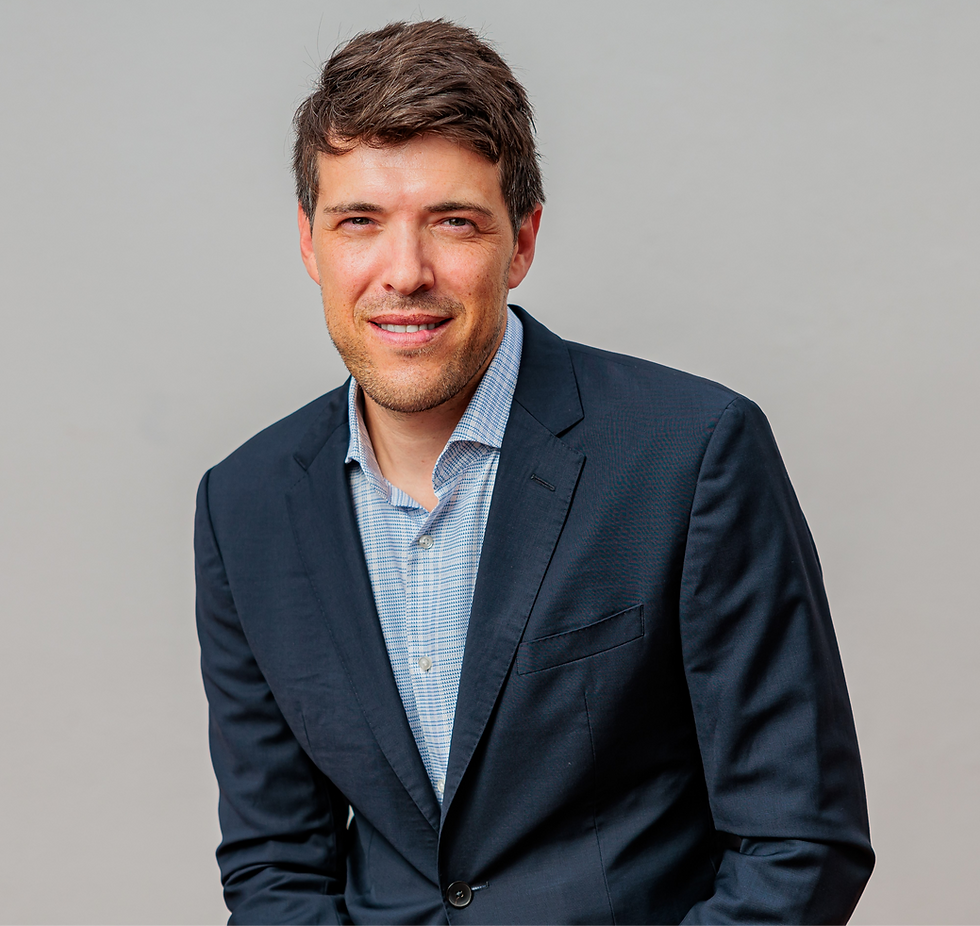
Daniel is Professor of Psychology and the Associate Dean of Research and Scholarships at the University of Calgary, as well as a Senior Research Fellow at the Alberta Gambling Research Institute (AGRI). His research program is primarily focused on behavioural pharmacology, personality, addictions, and risk-taking behaviour. Another major research area is the role of cognitive biases in disordered gambling. Specifically, he is interested in the influence of attention to visual stimuli captured with eye-gaze tracking on gambling outcomes and ultimately relapse among remitted gamblers. Lastly, Daniel has several other gambling-focused research interests, including disordered gambling subtypes, personality characteristics of gamblers, and the role of expectancies in gambling.
Who or what got you into behavioural science?
I would say that my path into psychology and behavioural science wasn’t exactly a straight line. Before college, I spent several years working in entry-level jobs. It was fine for that time in my life, but ultimately, I knew I wanted something more satisfying. Eventually, I decided to apply to a business program with the goal of working in marketing or advertising. While there, I somewhat serendipitously enrolled in Introductory Psychology as an elective course. It wasn’t that I was really interested in psychology per se, but it happened to fit my schedule and seemed better than the other options available.
Unexpectedly, that course became a turning point. It was the first time I was exposed to research and to more systematic ways of understanding human behaviour. I went on to complete a second degree in psychology, where I conducted research for the first time, followed by a Master of Science in Marketing and Consumer Studies. It was during my master’s training that I began conducting gambling research. Under the supervision of Dr. Karen Gough (Finlay), I received funding to run in-person slot machine experiments. I eventually completed my PhD at Dalhousie University under the supervision of Dr. Sean Barrett, and I have been working in psychology and behavioural science ever since.
What is the accomplishment you are proudest of as a behavioural scientist? And what would you still like to achieve?
As an undergraduate student, I remember the moment I sat down with my honours supervisor, Dr. Odette Gould, to discuss the results of my thesis. She guided me through the statistical analyses and helped me make sense of what the findings meant. This came after several months of running test sessions across three different towns, driving from place to place and collecting data. In that moment, I remember thinking, “wow, I’ve actually found something new, something no one has seen before”. It was then that my career aspirations finally came into focus. I could actually see myself doing this as a job.
This brings me to what I consider to be my greatest accomplishment: mentorship. As a professor, one of my most important responsibilities is helping to guide and support the next generation of scholars. I take particular pride in seeing students experience the same sense of excitement and discovery that I felt years ago. There is something truly special about creating work that is uniquely your own and realizing that it may one day make a meaningful difference. Over the past twenty years, I am proud to have supervised dozens of thoughtful, curious, and hard-working honours and graduate students. I hope that someday, that will be my professional legacy.
In terms of future achievements, my goals feel more open-ended at this stage of my career. For many years, my focus was on earning tenure and, eventually, promotion to full professor. I have been fortunate to reach those milestones. Looking ahead, one ambition that feels increasingly compelling is writing a book. It would be a significant challenge, but it would have the potential to reach beyond the usual academic audience. Who knows, maybe that’s an idea for my next research and scholarship leave?
With all your experience, what skills would you say are needed to be a behavioural scientist? Are there any recommendations you would make?
We live in a society that places great emphasis on quantifiable achievements that others can judge us by. In high school, I was admittedly an awful student on traditional metrics. I wasn’t interested in most subjects, with history being the exception. I spent more time daydreaming and playing sports than studying. When I look back and reflect on how I arrived at this point in my life, I think the driver for me was having the opportunity to pursue my curiosity. When I took psychology courses, I found something that sparked my interest. I had many questions and wanted to seek out the answers. Graduate school is well-suited for exactly this. Unlike undergraduate degrees, grades are not really a marker for success in a PhD program. Rather, if you want to pursue a passion and are really curious, you can have success in graduate school and academia.
For me, I think the best part of being a professor or an independent researcher is the intellectual freedom it brings. It is a rare and privileged position. Nobody tells me what I have to study, there are no quotas or corporate targets, and there is no clock to punch. The ability to pursue new ideas and research questions keeps the job fresh and interesting. I think for anyone who is thinking of a research career, they need to have a healthy curiosity and the drive to pursue the answers to questions. It is not easy, but it is unquestionably rewarding.
One recommendation for graduate students or early career investigators is to ‘play your own game’ and to not worry about comparisons with others. In academia, I feel like there is an unhealthy degree of self-manufactured stress. I sometimes see people in behavioural science, notably on social media, who appear to be overly concerned with metrics. For instance, constant monitoring of citation metrics, their H-index, or just their followers online. Some may see this as motivating, but I feel that this could be the academic version of ‘keeping up with the Joneses’. Focusing on your own interests and work, and avoiding comparisons, is likely a better path to progress and satisfaction with your career.
How do you think behavioural science will develop (in the next 10 years)?
This is a great question. We are living in a very interesting and challenging time. For instance, with the proliferation of AI and machine learning, it feels like the way we conduct research could change quite considerably. I don’t foresee AI necessarily replacing behavioural scientists, but instead, there will likely be an increased reliance on AI for assisting researchers in each phase of the process. Furthermore, there are plenty of new questions that come with the acceleration of this technology. I’m curious about how people will make many of life’s decisions. For instance, will we still rely on seeking advice from others? Or will an AI become our primary source of guidance for just about everything? Relatedly, I can see the issue of ‘trust’ being brought into increasing focus. Will people continue to trust research and scientists more broadly? Or will people put more trust and credibility into AI? Nobody has a crystal ball, but it is likely safe to say that the next 10 years will look very different than the past 10.
What advice would you give to young behavioural scientists or those looking to progress into the field?
As I previously mentioned, being curious and pursuing your own interests are key. I would also say that although technology like AI or neuroimaging is great, I think that we shouldn’t ignore tried and true methods for studying behaviour. For example, simple observation, using Likert scales, and running carefully designed experiments are all still valuable tools in the research toolbox. Embracing both the old and new will make you a more well-rounded and effective behavioural scientist.
Another tip for success is collaboration. In my experience, I find that research and academia often attract people at the more introverted end of the personality spectrum. It can be uncomfortable socializing with people you don’t know. However, for younger behavioural scientists, it is important to put yourself out there. Academic research is now a collaborative process. Fewer and fewer investigators are now ‘lone wolves’, conducting research alone in their own siloed laboratory. Success often comes through building strong and long-lasting collaborative networks. For instance, many granting organizations now require team grants over solo investigator applications. Finally, I think finding good mentorship is also important. As an early investigator, it can be quite confusing navigating academia. If you can find a good mentor, which often comes from seeking out collaborators, it is an invaluable resource.
What are the greatest challenges being faced by behavioural science, right now?
Yeah, there are a lot of challenges facing behavioural science at the moment. With everything that is happening in the world, it feels like science has been taking a back seat when it comes to priorities. For instance, grant funding is becoming increasingly difficult to come by, with more researchers competing for a smaller pool of funds. Similarly, funding for students and post-doctoral scholars is also incredibly competitive. Academic job openings receive very large numbers of applications. Moving forward, I think as a society, we all need to have a serious conversation about what the future looks like for universities and research institutions more broadly, and how much we want to invest in them.
What is your biggest frustration with the field as it stands?
Building upon the last question, the biggest frustration I have isn’t with the field itself per se, but rather a broader declining trust in institutions and skepticism toward science. The proliferation of misinformation online has contributed to an erosion of trust in science as an enterprise. Historically, investments in science and technology have led to an incalculable number of benefits that we enjoy today. Unfortunately, a large proportion of the public no longer sees value in scientific investment.
To think critically, it is important to ask questions and have a healthy level of skepticism in scientific claims. However, this isn’t really happening anymore in the way that it used to. Now, it feels like blanket skepticism has become far too common. This is the idea that nothing can be trusted, and people become immediately dismissive if faced with something they don’t agree with or that is uncomfortable. For society to progress, we need to have some level of agreement on what is and what is not true. We now live in a time where anyone can create very convincing AI videos, post them online, and in some cases, they become viral. The speed of the spread of misinformation is incredibly challenging.
Behavioural science has an important role to play. As scientists, we need to speak up, highlight the broader value of evidence, and work to rebuild public trust in research institutions.
If you weren’t a behavioural scientist, what would you be doing?
You know, for some people, I bet this would be a difficult question to answer. For me, psychology was really a second love. Don’t get me wrong, this is the career I wanted and would likely still enjoy the most. However, if I had to choose another path, I would want to be a historian. Whether that would be an academic role in history rather than psychology, or at a museum or similar role, I think it would be a good fit for my personality. As a child, I was captivated by the WWII footage shown every Remembrance Day, drawn to the events that brought the world to the brink. That connection is also personal; my grandfather served in the Canadian infantry during the war. I believe that understanding both our personal and collective histories is essential to making sense of the present and shaping the future. Fortunately, I currently teach the History of Psychology at the University of Calgary, so I do get to pursue both interests simultaneously in my teaching role. I have deep admiration for those who can bring historical events and stories to life in ways that make them feel more human and meaningful. History, at its best, helps us see the present more clearly. So, I would say that would have been my ‘backup plan’.
How do you apply behavioural science in your personal life?
When you look closely, it becomes clear that behavioural science and psychology touch nearly every part of our lives. As I have gotten older, I have spent more time reflecting on where I would like to be in the future, not only in terms of career ambitions, but also with respect to health, parenting, friendships, and relationships. Psychology and behavioural science offer powerful tools for thinking about these domains; however, the sheer volume of topics and evidence can also feel overwhelming.
For me, this has meant trying to simplify wherever possible. One approach has been to focus on narrowing in on a small number of good habits. I know, for example, that the popular benchmark of 10,000 steps per day is more marketing than science, but I appreciate how it breaks down a complex goal into something small and achievable. Wearing a Fitbit and aiming for an average of 10,000 steps helps keep my daily activity aligned with my longer‑term health goals. I have also tried to apply and model some of these same principles with my kids, emphasizing consistency, small steps, and progress instead of perfection.
Which other behavioural scientists would you love to read an interview by?
There are so many great people in the field, and choosing one is challenging. At the moment, I would be especially interested in hearing Dr. Gerd Gigerenzer's opinions, the eminent German psychologist. Following the passing of Daniel Kahneman, Dr. Gigerenzer wrote an article discussing his legacy as well as their correspondence over the years. It was a fantastic read. He has also written some really interesting papers recently outlining an alternative view of heuristics and biases in decision-making. His opinions and research on the adaptive nature of heuristics are quite interesting. I think having him outline his thoughts on the future of behavioural science would be great.
Thank you so much for taking the time to answer my questions Daniel!
As I said before, this interview is part of a larger series which can also be found here on the blog. Make sure you don't miss any of those, nor any of the upcoming interviews!
Keep your eye on Money on the Mind!


Great interview—really insightful to read about creative thinking and decision-making. It’s interesting how personal preferences shape choices in different areas of life. Just like when I’m in Swansea and search for mexican food near me, I rely on taste, experience, and recommendations to decide.