Interview with Barnabas Szaszi
- Merle van den Akker
- May 4
- 7 min read
Updated: May 6

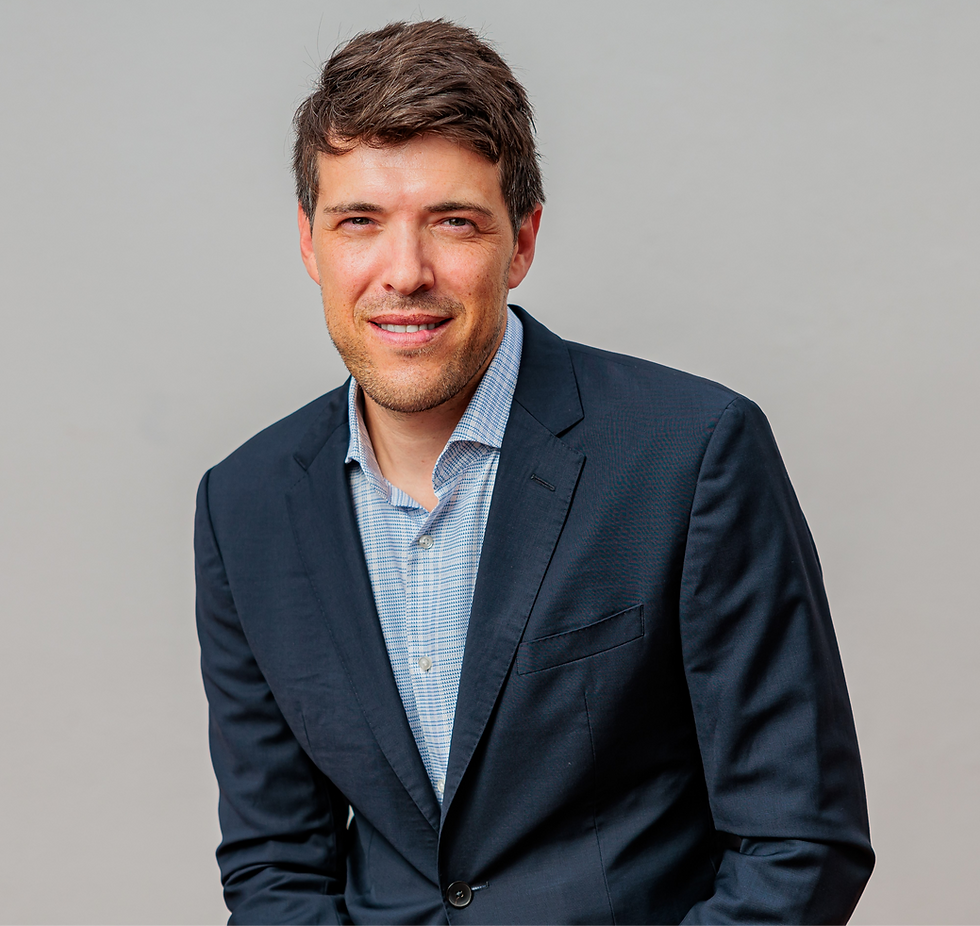
Barnabas builds large-scale behavior change projects with a strong focus on social impact, aiming to support vulnerable individuals and groups. He leads the Behavioral Science Center at the Corvinus Institute for Advanced Studies and the Behavioral Science Lab at Eötvös Loránd University. Among other initiatives, he leads one of the world’s largest happiness research projects, currently running across 70 countries. He holds dual degrees in psychology and economics and earned his Ph.D. in experimental psychology in 2018. Since then, his research has been published in leading journals such as Nature, Proceedings of the National Academy of Sciences, or Nature Human Behaviour. He has received 13 scholarships and awards, including the Hungarian Central Bank Scholarship, the National Excellence Program, Bolyai, Campus Mundi, Eötvös, Rosztóczy, and Fulbright (twice), as well as the Promising Researcher Award and the Roska Tamás Award. He was a visiting student researcher at Columbia University (2017–2018) and a Fulbright Visiting Scholar at Harvard Business School in 2024.
Who or what got you into behavioural science?
The first time I got interested in this was during high school. Someone came to give us a workshop and did a small experiment with what looked like Coke and Pepsi. We had to taste them and judge which one we liked more and how different they were. At the end it turned out they were actually the same drink. What struck me was that everyone felt differences even though the drinks were identical. That made me realise how strange human perception can be and how people can experience something that isn’t actually there. I didn’t know it was behavioural science at the time, but it fascinated me.
Later I studied economics because I asked friends what the hardest subject was at the best university I could attend, and they told me mathematical economic analysis. After a year I realised it was too boring, so I took a gap year hitch-hiking through Europe and North Africa. When I came back I continued economics but also started psychology at another university in parallel. Since then I’ve basically been juggling between the two disciplines.
What is the accomplishment you are proudest of as a behavioural scientist?
I rarely experience pride spontaneously, so from time-to time I need to remind myself that celebrating and being proud are OK. I think I’m proud of the large-scale projects I’m leading or co-leading. One is a project called Multi-100, which looks at analytic variability in behavioural and social sciences and was published in Nature. We took 100 papers across fields like psychology, economics, marketing, and criminology and asked around 500 researchers to reanalyse the same datasets. The goal was to see how much results vary depending on who analyses the data and what analytic choices they make. Another project I’m working on is the Global Happiness Mega Study, where we test 7 different happiness strategies across the globe, with multiple experimental designs for each question. The idea is to understand not just whether something works, but what works for whom and under what conditions. My hope is that these studies make a step forward and provide more generalizable and robust answers than most past studies.
I’m also proud of my team here in Budapest. They are an exceptionally motivated, intellectually curious, and sharp group of students and early-career colleagues, and working with them is a genuine pleasure. Finally, I think I can be proud of the fact that these large-scale projects, developed together with many colleagues, were initiated and led from Hungary in lower-prestige, resource-constrained environments without a famous supervisor or a large network. I also believe this context fostered a mindset that always pushes me to search for opportunities and enables me to perform at my best under pressure and with limited resources.
What advice would you give to young behavioural scientists or those looking to enter the field?
My main advice is to focus on methods.
Young researchers are usually motivated by interesting questions, which is great, but to answer those questions properly you need to understand the tools available to you. You should explore different methodological approaches and understand their strengths and limitations.
Knowing methods also helps you interpret other people’s findings — what you should believe and what you shouldn’t. And it helps you understand the boundaries of your own results so you avoid overclaiming.
What are the biggest challenges for behavioural science?
One of the biggest challenges is generalizability. Human behaviour is extremely complex, and what we observe in one study often depends on many interacting factors — the context, the population, the implementation, and even the analytical choices. So the key question is not just whether something works, but when it works, for whom, and why.
Early in my career, I experienced this very directly. I tried to build on interesting findings from the literature, ran experiment after experiment, and nothing really worked. That made me realise that the problem is not just whether effects exist, but that we often don’t understand their conditions well enough.
A related challenge is that many studies are too small or too narrow to support the kinds of claims we want to make. You can show an effect in a few experiments, but that doesn’t mean you can generalise it broadly. And yet the incentive system in academia pushes researchers to make big, strong claims and publish them in top journals.
This creates a tension: good science requires caution and humility, but the system rewards boldness and novelty. So the problem is not just individual behaviour — it’s systemic. Researchers need publications to survive, and that shapes how the science is done.
Because of this, I think the field (and most behavioural scientists) face a kind of choice: overclaiming or collaboration. If we continue to rely on small studies and make large claims, we risk losing credibility. The alternative is to work together — large-scale collaborations, multiple populations, multiple designs — to provide stronger and more reliable answers. No single researcher really has the resources to answer the most important questions alone.
So overall, the biggest challenges are interconnected: complexity, limited generalizability, systemic incentives, overclaiming, and the need for much more collaboration and methodological humility.
How do you think behavioural economics will develop in the next 10 years?
I think the field is becoming more mature. We are moving beyond the idea that there is a simple nudge or one key factor that explains behaviour. Most researchers now recognise that human behaviour is complex, and that the same intervention can work in one context and fail in another.
Because of that, I don’t think the next ten years will be about discovering completely new behavioural “effects.” We already know many of the core drivers — things like social influence, timing, friction, identity an so on. The real challenge now is understanding how these factors interact, for whom they work, and under what conditions they stop working.
That means the field will have to move toward better data and more context-sensitive answers with more emphasis on exploration before testing. As a field, we have often been too focused on quantitative methods and too dismissive of qualitative work —and this is something I’was also guilty of in the past. But if we don’t properly understand the context and the relevant factors, we risk answering the wrong questions very precisely. So I think better behavioural science will start with deeper exploration, and then move into more rigorous testing.
Overall, I think the field will become less about isolated “sexy” findings and more about building robust, generalizable knowledge.
If you weren’t a behavioural scientist, what would you be doing?
Most probably I would be an entrepreneur.
Before academia I actually started a small digital agency that helped finance my studies, and at one point I had a team of around ten people. I realised that working on other people’s projects for money wasn’t very motivating for me, though. I’m more interested in projects with social impact.
In many ways I see academia as similar to entrepreneurship. In both cases you try to identify an important problem where there is no good solution yet, and then innovate to solve it. The difference is that the output in academia is impact or knowledge rather than profit.
How do you apply behavioural science in your personal life?
I apply it quite a lot. I try to consciously design my life through choice architecture.
For example, I structure my mornings so I avoid meetings and instead focus on writing or strategic thinking. I also use friction and convenience to shape habits. When I started running, I realised I needed to remove friction. So when I took my kids to kindergarten in the morning I was already dressed in running clothes and running shoes. At that point it would have been more embarrassing not to run than to run. Making the behaviour easier helped me build the habit, and now I run roughly 1000 miles per year.
Which other behavioural scientists would you love to read an interview by?
Many people have already been interviewed in your series whom I admire. One person who inspired me — even though he probably is the most lame person to mention in such a series — is Daniel Kahneman, but not because of his findings, but particularly because of his humility. Despite being one of the most influential scientists in the field, he was always very self-critical and well-balanced about what he claimed.
Among living researchers, I would recommend some early-career scholars from Central Europe who deserve more visibility, such as Stefan Banik, Marek Vranka, Felix Holzmeister or Gilad Feldman.
Thank you so much for taking the time to answer my questions Barnabas!
As I said before, this interview is part of a larger series which can also be found here on the blog. Make sure you don't miss any of those, nor any of the upcoming interviews!
Keep your eye on Money on the Mind!


Comments