Interview Sameer Munshi


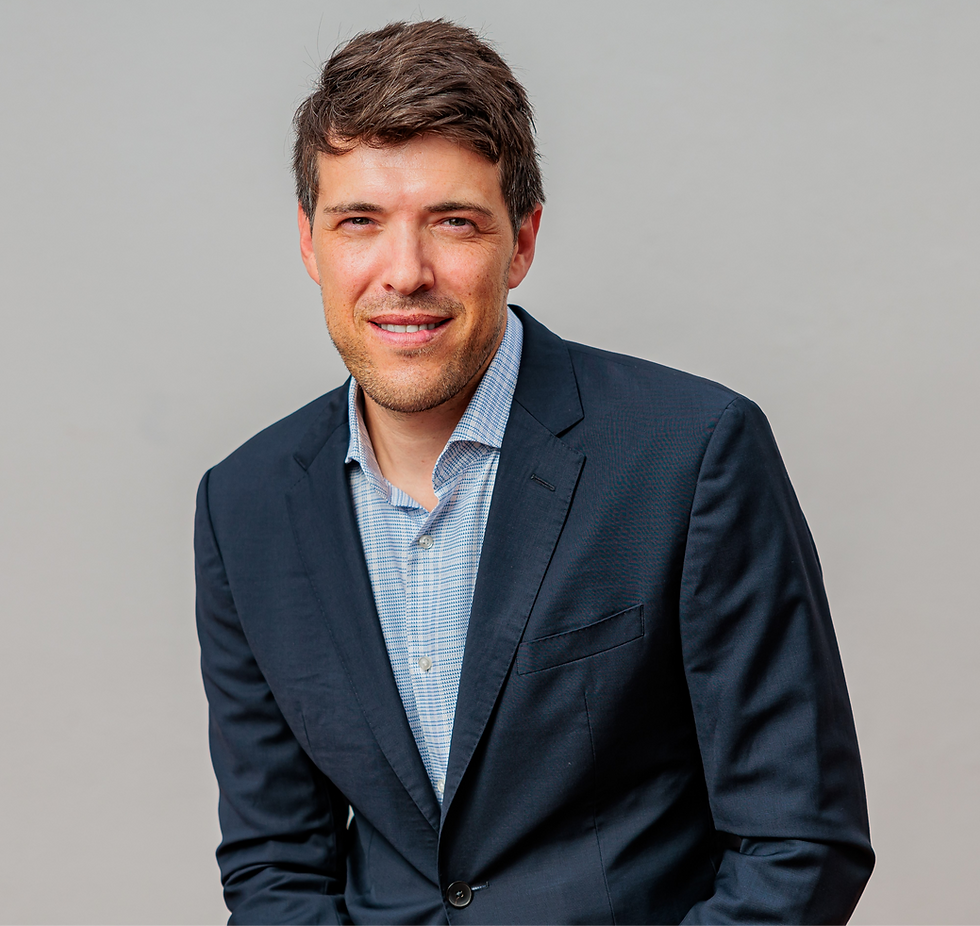
Behavioural Science is a rapidly expanding field and everyday new research is being developed in academia, tested and implemented by practitioners in financial organisations, development agencies, government ‘nudge’ units and more. This interview is part of a series interviewing prominent people in the field. And in today's interview the answers are provided by Sameer Munshi. Sameer leads the Behavioral Science Group at EY within the US Financial Services Consulting practice, based in NYC. His group helps senior executives make smarter business decisions by applying methods from behavioral science to traditional product, marketing, and sales challenges. The team has conducted dozens of lab and field experiments, leading to substantial increases in revenue for client firms. Sameer holds a Master’s Degree in Behavioral Science from the London School of Economics and an MBA from Cornell University. He is a frequent speaker and writer on all things behavioral science in business. You can connect with Sameer on LinkedIn.
How did you get into behavioural science?
I would say it was a bit of a happy accident. Back in 2019, I had been working with large Financial Services firms for over a decade, half of that as a consultant. Most of these companies were hyper focused on digital transformation. First it was, how do we build apps on tablets for consumers? How do we take back-office financial planning software and redesign it into a sleek experience? We were very good at solving these types of challenges.
But quickly there was a next, harder, set of questions. How do we get financial advisors, often with 20+ years’ experience, to actually adopt this new technology? How do we get consumers to actually log in to this new financial wellness platform?
And I remember very vividly that feeling that I should have the answer. But really, I didn't.
After a bit of research and many conversations, I stumbled upon the Behavioral Economics Guide and learned that an entire academic domain existed studying behavioral science. Immediately I caught the bug. I read everything I could get my hands on. Spent the Christmas holiday preparing a pitch to my leadership to invest in the space, including sponsorship of my master’s program at the London School of Economics. Fast forward and I’m quite grateful to have had such supportive leaders.
What do you think the biggest challenge for behavioural science is?
Half of the battle is articulating what behavioral science is and what the value is for a given company.
To me, behavioral science is simply a smarter way to make business decisions. Full stop. But the language of business is ROI. You can have the shiniest process in the world, but if you can’t articulate the expected outcomes, the cost-benefit trade-offs etc., then it won’t matter in a large organization – they won’t buy in.
To illustrate this, a major US firm once approached us for a proposal on applying behavioral science to drive product growth. However, we failed in that proposal to “do the math” on the ROI potential, and the deal fizzled out. It was a hard but important lesson for us. Since then, as you can imagine, we always lead with identifying the potential opportunity size for a given challenge, so that executives can make decisions with a more concrete understanding of the potential business outcomes.
That said, the behavioral approach is still fundamentally a different way of thinking for large companies. Even for the most well-intentioned and forward-looking businesses, it’s no easy feat to challenge decades of “this is how we’ve always done things.”
The other half of the battle is scale. I think the field generally is doing well in terms of training applied scientists. Where I think we need more focus is training these scientists to also be business people that can sell. At the same time, we need to be training more traditional business folks (like me) to learn applied science.
On that note, if I could push for a conversation in our field - it's do we really need to call this (applied) behavioral science? Is that doing us any favors? Is it helping to scale the methods in the real world?
Let's assume that this challenge gets tackled heads on: we are going to rename the field or we put a lot less emphasis on what we call the field. How is that going to progress behavioral science say for the next decade or so? What do you then think is realistically going to happen?
I'll broaden it out to what I think is going to happen over the next 10 years, regardless of the name of the field. I don't think we'll be able to talk any method in behavioral science without AI. And I know that pretty much seems like every conversation and every article that’s out there right now is about Generative AI…but already you can see what it does for literature reviews, data analysis, brainstorming interventions. I think there's a whole synthetic data world out there where you might not even need real consumers to run experiments. Hard for me not to get excited about that! So in 10 years, which is a long time, I would say behavioral science and the methods from psychology, and in general experimentation, are plugged into the AI engine. Maybe I'm a little bit biased coming from the consulting world, and I'm not saying people are going to lose their jobs, but I think jobs will have to change. Behavioral science is a process that will become much more efficient with Gen AI. We still need people who understand the process, behavioral scientists, but I think how they spend their time will differ in the coming decade. And I think it's great for the field because it allows for much more scaling.
On a similar tack then, what, say for the next five years or so, will separate a good behavioral scientist from an excellent behavioral scientist? What is the skill set that you're going to need in this rather dynamic environment?
I'm going to go back to sales. I think without being able to articulate and persuade your peers, your leaders, your clients, multiple stakeholder groups - to do things in a way that they're not used to, or maybe don’t fully understand – not being able to sell is a problem. As scientists, we can hypothesize interventions and we can design tests, but if we can't convince a head of strategy or product or marketing exactly what value they will personally get out of the process, then it’s highly unlikely the project will move forward. There are lots of competing priorities, and there is legitimate reputational risk to trying something new.
Given the changes in the field, do you still recommend that people get into behavioural science and if so, how?
I'm extremely biased, but I say yes. If you feel a passion and interest in this subject, absolutely get into it. If your learning style is like mine, which requires me to go into a program with structure, with deadlines, go do a masters. Go to LSE, or go to Penn etc.
If you’re not sure about a Master’s, there’s plenty of bootcamps out there. Learn Applied BeSci will teach you end-to-end applied be-sci. Before LSE, I actually attended BJ Fogg’s bootcamp. He’s a great guy, was a huge help behind the scenes early days for me. BJ teaches a very practical method of behavior design. Some have maybe said its ‘over-simplified,’ but frankly I think that’s the beauty of it. So, I use the Fogg model frequently; in workshop settings, in introductory settings, just to get people to realize that there is an intuitive model to think about behavior. And anyone in business, from the C- level all the way down to analyst level, from product to design to technology, they immediately can understand it.
If you can learn independently, and I'm very lucky to have folks on my team who can, such as Liam Hanlon, if you can learn independently take online courses and apply it to your work. There's lots of free resources! And then the other advice I'd give to anyone who wants to apply it, even if they don't have a behavioral science role is to just start doing it. When I say start doing it, of course, that doesn't mean you can go and run some major randomized controlled experiment at a F500 company tomorrow… but look at the literature, come up with some hypotheses. Do your job but add in the flavor or lens of behavioral science. Ask the right questions. Find the relevant frameworks. Worst case scenario, you've got practice doing the lit review, or developed some kind of survey and you got to practice pitching it. Best case? You never know!
What are you proudest of having achieved so far as a behavioral scientist?
I think the easy answer is just growing from zero to a full-blown behavioral science business. And having proven to myself, my company, and my clients that this works, as a process.
In particular though, the hardest part of the process is getting buy-in on running a true experiment. So when we did that for the first time, that’s probably my real proudest achievement as a behavioral scientist. And frankly, I’ve been lucky to have mentors along the way – folks like Matt Wallaert, Hal Hershfield, Jez Groom – who would always take my call when I needed a little guidance. (Thank you!)
But this just feels like the very beginning, Merle. I will feel more proud when we really scale this. And not just at my company, I mean scale this across all businesses, globally. I’ll be proud when we figure out how to make this the default method for making business decisions.
So that is what you're still trying to achieve?
Yes, that and really putting our heads together to solve for the intersection of BeSci and AI. In fact, we’re currently working on prototype that aims to integrate behavioral science principles into business decision-making processes. The opportunity is endless. We can do a whole separate interview on that!
Do you apply behavioural science in your own life? Does it enter the front door of your house or does it stay at work?
I like how you framed that. I do apply behavioral science to my own life. As soon as I got into behavioral science, and again I'll go back to BJ Fogg here, his tiny habits led me to better understand habits and habit stacking. Six years ago, if you ever told me I would meditate, journal, and read every morning, I would have laughed you out of the room. It just wasn't who I thought I was. But now every morning, after I brush my teeth, guess what I do? It’s automatic now.
To be fair, I've tried it with my kids to a lesser degree of success, but I’ll keep experimenting!
If you hadn't found behavioral science, what would you have been realistically? Not a reader apparently.
Ah, love a good counterfactual. I think I would be doing almost exactly the same thing I'm doing now, which is helping businesses to grow, but I would be doing it much less effectively.
And I think that perfectly explains why I was so immediately drawn to behavioral science to begin with: it’s simply a smarter way to make business decisions.
You've mentioned quite a few names throughout this interview already, but tell me, who has really inspired you? Who should I interview next?
So you've done Jez Groom, Matt Wallaert and Jeff Kreisler already. How about Hal Hershfield?
Also got him already!
What about some of my amazing LSE classmates? Sarah Cunningham, Nitish Upadayha, Jazmin Correa, Beatrice Andrew.
Sarah leads the World Wellbeing Movement. Nitish is doing be-sci at a global law firm. Jazmin is a pharma leader. Bea runs her own consulting business. There are many more to name, but you won’t be disappointed with this start!
The views reflected in this article are the views of the author and do not necessarily reflect the views of the global EY organization or its member firms.
Thank you so much for taking the time to answer my questions Sameer!
As I said before, this interview is part of a larger series which can also be found here on the blog. Make sure you don't miss any of those, nor any of the upcoming interviews!
Keep your eye on Money on the Mind!


Khi truy cập vào live casino và game bài, mình thấy tốc độ phản hồi khá đều. Trong quá trình đọc thêm thông tin về 789 BET mình nhận thấy hệ thống còn tích hợp thêm slot, esport và thể thao nên tạo cảm giác đầy đủ hơn. Nhìn chung, website có cách tổ chức khá mạch lạc, dễ tiếp cận và tạo cảm giác thuận tiện khi sử dụng.
Đang lướt qua một số chủ đề khác, mình tiện mở https://jun88us.com/ để xem thử cách trình bày. Mình không đi sâu vào từng phần mà chủ yếu quan sát bố cục chung, danh mục và những nội dung nổi bật. Giao diện nhìn khá gọn, các khu vực được bố trí riêng nên theo dõi không quá rối mắt. Sau đó mình chuyển sang phần thông tin khác.
tram score mình có ghé vào xem thử sau khi thấy xuất hiện trong một vài nội dung trên mạng, chủ yếu để tham khảo cách họ thiết kế giao diện và tổ chức thông tin. Dù chỉ lướt nhanh nhưng có thể nhận ra bố cục được chia khá rõ, các phần nội dung hiển thị tách bạch nên nhìn không bị rối. Thanh điều hướng bố trí dễ thấy, giúp việc chuyển qua lại giữa các mục diễn ra khá nhanh. Khi dùng trên điện thoại, trang vẫn hoạt động ổn định, thao tác mượt. Tổng thể mang lại cảm giác dễ tiếp cận.
Thấy dạo này cụm từ RR88 xuất hiện khá nhiều trên bảng tin của các hội nhóm, sẵn tiện mình bấm vào ngó thử cấu trúc trang web. Khá bất ngờ là web load rất mượt, không có tình trạng bị lag hay nhồi nhét banner rối rắm gây mất tập trung. Nhìn chung cách họ tối ưu hiển thị rất thân thiện với người dùng mới. Bác nào hay cập nhật thông tin trên này rồi cho mình hỏi thăm chất lượng thực tế sử dụng lâu dài như thế nào với ạ?
78win mình có ghé vào xem thử sau khi thấy được nhắc đến trong một vài nội dung trên mạng, chủ yếu để tham khảo cách họ thiết kế giao diện và bố trí thông tin. Cảm nhận ban đầu là trang web trình bày rất mạch lạc, bố cục cân đối và chia khu vực rõ ràng nên nhìn rất thoáng mắt. Khi truy cập trên điện thoại, trang vẫn hoạt động ổn định, thao tác tương đối mượt. Tổng thể mang lại cảm giác đơn giản và dễ dùng.