Interview with Christina Hanschke
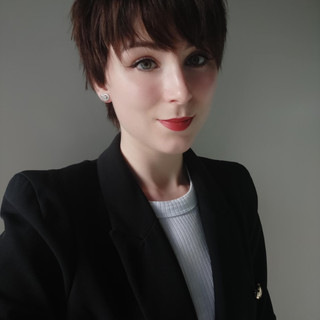

Christina's multidisciplinary career has focused on understanding people’s needs through applying behavioral science, human centered design, and systems thinking in order to co-create sustainable and innovative interventions to address complex health challenges. She was privileged to hone these skills while working at Final Mile in the global health space. There she was able to work with colleagues and collaborators on vaccine hesitancy and HIV prevention and treatment adherence. Currently she is supporting the patient experience team at the University of Chicago Medicine. In her free time Christina enjoys making music with friends and reading on the couch with her dogs.
Who or what got you into behavioural science
I very much stumbled into behavioural science. My background is actually in music therapy. That was my undergraduate degree, and for a while I worked as a nanny as well. After that, I went back to graduate school and did a degree in human–computer interaction. At that point I was working in user experience and looking for another job, and I came across a digital strategist role that was posted through Fractal Analytics.
It turned out that the role was actually with Final Mile, which is a behavioural science consultancy. I hadn’t really heard of behavioural science as a field before that, but when I started learning more about the work, something clicked. The mix of psychology, influence on social behaviour, and applied problem‑solving felt like all the different strands of my background coming together. So I often describe myself as someone who learned how to apply behavioural science over time rather than formally training as one from the start.
Even now, I don’t refer to myself as a behavioural scientist. Coming from music therapy, there was a very clear professional pathway: specific education, an internship, an exam, and then you earned the title. Behavioural science doesn’t really work like that, so I tend to think of myself as someone who applies behavioural science responsibly and ethically rather than claiming a formal label.
What is the accomplishment you are proudest of as a behavioural scientist? And what would you still like to achieve?
When I think about what I’m most proud of, it’s not a single project or outcome, but the kinds of spaces I’ve been able to work in and the people I’ve worked with. During my seven years at Final Mile, I had the privilege of working on projects in global health that really mattered. That included work on HIV prevention and treatment adherence, tobacco cessation, and vaccine hesitancy, both for COVID and the HPV vaccine.
What stands out to me most is the collaboration. We worked closely not only within our own team at Final Mile, but also with ministries of health and experts deeply embedded in the global health space. Being able to collaborate across disciplines and cultures, and to use behavioural science to hopefully contribute to better health outcomes, felt incredibly meaningful. I’m proud of the way those teams worked together and of the care that went into applying behavioural science thoughtfully rather than mechanically.
Looking ahead, what I would still like to achieve is more sustained, community‑level impact. In my current role within the University of Chicago Medical system, I’m excited by the possibility of being able to track changes over time and to see whether interventions actually make things better in the long run. I don’t have ambitions to “fix” complex systems, but if I can help make things a little less bad—especially in healthcare contexts—that feels like a worthwhile goal.
With all your experience, what skills would you say are needed to be a behavioural scientist? Are there any recommendations you would make?
Curiosity is the foundation. Behavioural science, design, and research‑driven fields all require continuous learning. You don’t ever really “finish” learning, and the moment you think you have all the answers is probably the moment you stop being effective. From a practical standpoint, skills like framing good questions, active listening, qualitative pattern‑finding, and translating insights into usable frameworks are incredibly important and surprisingly hard to do well.
Another critical skill is what Adam Grant describes as confident humility. You need enough confidence to contribute and challenge ideas, but enough humility to recognise that you don’t know everything and that good insights can come from anywhere. Collaboration is also essential. No one works alone, and being able to work with people you don’t always agree with is part of the job. Finally, communication matters. Being able to explain complex ideas in language that resonates with people is often more impactful than demonstrating technical expertise.
What are the greatest challenges being faced by behavioural science, right now?
One major challenge is managing expectations—both internally and externally. Behavioural science often deals with complex, uncertain systems, and it’s not always possible to guarantee that a specific intervention will work in a precise or predictable way. That uncertainty can be uncomfortable for stakeholders, especially in environments where resources are limited and outcomes are expected quickly.
Another challenge is sustainability. Behavioural scientists are frequently brought in as external consultants or short-term contributors, which can make it difficult to see whether interventions are implemented well or sustained over time. Without long-term ownership or integration into organisational processes, even well-designed interventions can fade away.
There’s also a challenge around accessibility and communication. Behavioural science can become overly technical or jargon-heavy, which creates distance between researchers, practitioners, and the people affected by the work. Balancing nuance with clarity—so that insights remain both accurate and actionable—is something I think we should continually strive towards. Addressing these challenges requires not just better methods, but better collaboration, communication, and humility.
How do you think behavioural science will develop (in the next 10 years)?
I’m cautiously optimistic about the future of behavioural science, but I don’t think it’s going to follow a simple or linear path. If anything, I think it will continue to fragment and diversify depending on the contexts it’s applied in. In healthcare, for example, I see real potential for behavioural science to play a deeper role in supporting trust, communication, and navigation of complex systems—things that really matter to people but are often treated as secondary to clinical or operational concerns.
I also hope behavioural science becomes more embedded in organisations and communities rather than remaining something that only lives in specialised teams or consultancies. That kind of embedding could make the work more sustainable and more grounded in lived experience. At the same time, I think there’s a real risk that, as behavioural science spreads, it gets oversimplified. Complex problems don’t have single behavioural solutions, and I worry about narratives that imply a well-designed nudge can fix deeply structural or historical issues.
For me, the future of behavioural science is less about finding the next big idea and more about deepening how we work: better integration with systems thinking, more attention to ethics and power, and greater involvement of the communities affected by interventions. If the field can hold onto that nuance while still being practical and accessible, I think it will continue to be relevant and useful in meaningful ways.
What advice would you give to young behavioural scientists or those looking to progress into the field?
I would encourage people to keep their curiosity and not worry too much about job titles. In my experience, very few roles are actually advertised as “behavioural scientist,” but elements of behavioural science can be applied in almost any role. Gaining practical experience alongside theory is incredibly valuable, and learning how to translate ideas into real‑world contexts makes a huge difference.
I also tell my students to think creatively about how they present their work. Turning projects into portfolio pieces, showing how behavioural insights were applied, and demonstrating ethical intent can really help set people apart.
What is your biggest frustration with the field as it stands?
My biggest frustration is unnecessary jargon. There are moments where behavioural science language becomes so technical that it stops being useful. I once joked with colleagues that we needed to use “human people language.” Most of the time, the goal isn’t to prove how smart we are, but to help people understand, engage, and act. When the field forgets that, it risks distancing itself from the very people it’s meant to serve.
If you weren’t a behavioural scientist, what would you be doing?
There’s definitely a version of my life where I would have stayed in music therapy, worked with young children, or been a teacher. I really enjoy one‑on‑one work and supporting people directly. That said, I’ve had a very non-linear career already, so I suspect that even if I weren’t doing behavioural science or human‑centred design, I would still end up in roles that involve learning, curiosity, and trying to understand the “why” behind people’s behaviour.
How do you apply behavioural science in your personal life?
I try to apply behavioural science in small, practical ways. I use commitment devices with friends, for example, or tools like my Apple Watch to motivate myself to exercise—even though I’m very aware of why those things work. I also try to apply behavioural science more emotionally by stepping back when I feel frustrated and asking why someone might be behaving the way they are. That shift toward compassion and context has probably been the most valuable personal application for me.
Which other behavioural scientists would you love to read an interview by?
Two people who immediately come to mind are former colleagues of mine: Anushka Ashok and Saransh Sharma. They are both incredibly thoughtful practitioners. Saransh has moved into product development and is doing interesting work around agentic AI, while Anushka continues to apply behavioural science in global health contexts as a consultant. I really admire the way both of them think about impact, ethics, and application.
Thank you so much for taking the time to answer my questions Christina!
As I said before, this interview is part of a larger series which can also be found here on the blog. Make sure you're subscribed so you don't miss any of those, nor any of the upcoming interviews!


Comments