Interview with Ishaan Prinz
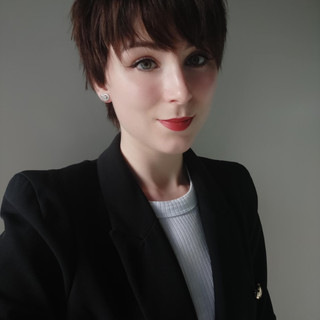
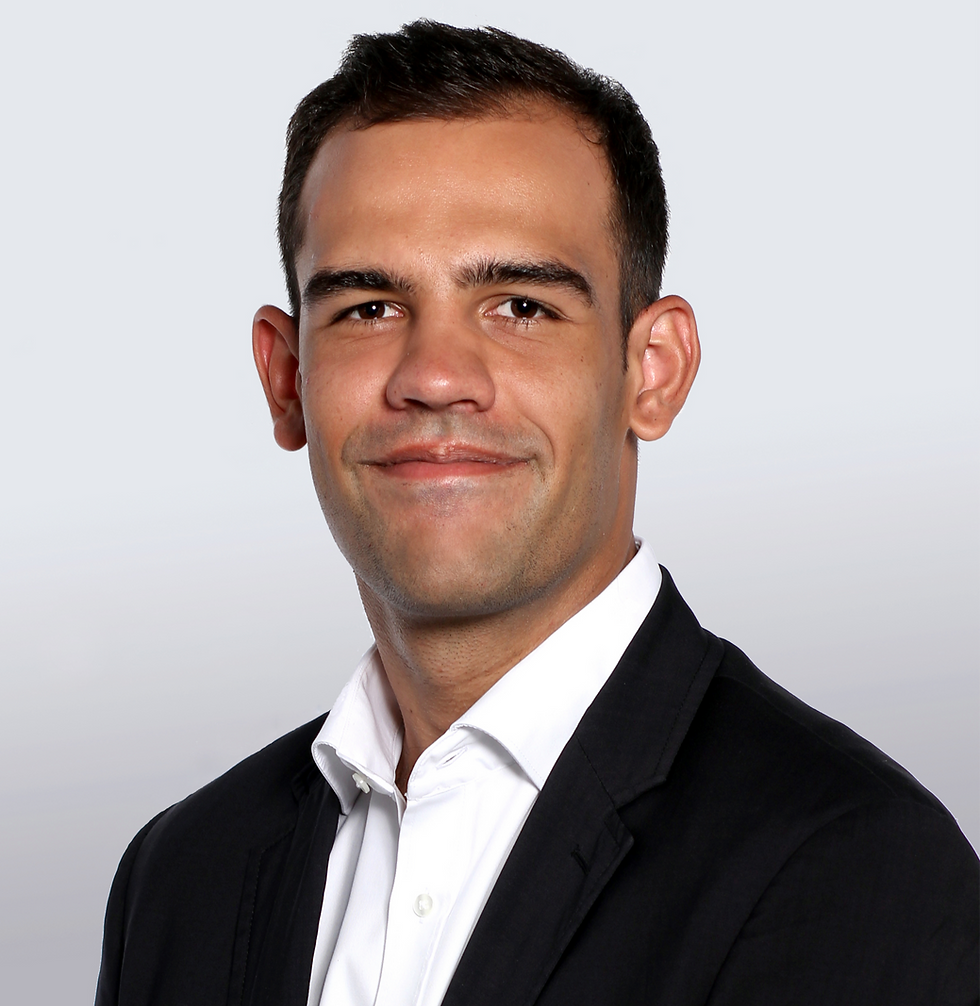
Ishaan is a Behavioral Scientist at Vanguard, where he applies insights from psychology and economics to shape business and product strategy to help retail investors make healthier financial decisions. Prior to Vanguard, Ishaan was a Human Capital Consultant at KPMG in Singapore. He holds an MA in Behavioral and Decision Sciences from the University of Pennsylvania and a BA in Psychology from Haverford College. Outside of work, he can be found on the tennis court, playing board games, and exploring Philly in search of its best restaurants.
Who or what got you into behavioural science?
I think I was drawn to behavioural science without even knowing it from a young age.
I started studying psychology in high school and was fascinated by theory and research on how people think and behave. But in hindsight, I think that interest in psychology was already there - I remember sitting in class and sometimes being more focused on how students were reacting to the teacher than what the teacher was actually saying.
At the same time, I was really drawn to business. My grandfather was a businessman, and I’d listen to him on work calls as a kid, not understanding the details, but intrigued by how decisions were being made.
For a while, those felt like two separate interests, psychology on one side, business on the other. The connection between the two only really clicked when I met someone in the Behavioural and Decision Sciences program at Penn. I learned about the program and was pretty mind blown. That’s when it all came together, and I decided to apply.
What is the accomplishment you are proudest of as a behavioural scientist?
I think first, I just feel very grateful to be able to work with such smart and talented people every day. Being part of that community is something I imagined when I was applying to grad school, and now it’s a reality.
More concretely, I’ve had the chance to lead research that is now helping shape strategy and product decisions. For example, I worked on portfolio construction and how choice architecture can improve that experience.
Knowing that the research I do could help clients make better financial decisions is very motivating. And I’m also proud that I trusted that there was a path for me in this field and was patient enough to find it.
What skills are needed to be a behavioural scientist? Any recommendations?
I like to think of it as wearing many hats.
You need to be a scientist — designing studies, running experiments, analysing data. But you also need to be a strategist, thinking about where behavioural science can have the most impact. You need to be a consultant, asking the right questions, and also a strong analyst, finding patterns in behaviour.
The key is not just having these skills, but being able to switch between them. Sometimes even within the same day, or even the same conversation. Everyone has their favourite hats, and that’s fine, but you need to be nimble enough to adapt to what the situation requires.
What advice would you give to young behavioural scientists or those looking to enter the field?
For me, having a strong foundation was really important. The MBDS program helped me build the skills I needed to both get the job and perform well in it.
Beyond that, I’d really recommend talking to as many people in the field as possible. Try to understand how behavioural science is actually applied in different organisations — where it sits, what challenges people face, and how it drives outcomes.
At the beginning, you might not even know what questions to ask, but over time you get better at it. And that helps you get a much clearer picture of what the field actually looks like in practice.
How do you think behavioural science will develop (in the next 10 years)?
If I’m optimistic, I’d say the field will move from focusing on individual nudges to shaping entire systems and experiences. Right now, a lot of work is still quite discrete — you improve one touchpoint, one message, one intervention. But in reality, people experience journeys. For example, in investing, you go from onboarding, to portfolio selection, to maintenance, to rebalancing. These are often treated as separate steps, but from a user perspective, they should feel like one cohesive experience.
I’d love to see behavioural science play a role in connecting those pieces — not just influencing one decision, but shaping the entire journey end-to-end. That includes design, narrative, timing, and how all the pieces fit together. To get there, behavioural scientists need to operate at a more strategic level. It’s not just about running experiments, but about influencing broader product and organisational decisions. That often requires working across multiple teams, aligning different stakeholders, and thinking at a system level.
I also think behavioural scientists are uniquely positioned to take a bird’s-eye view. Because we often sit across teams, we can identify where experiences are fragmented and where better coordination is needed.
So ideally, the field evolves toward being more embedded in how systems are designed — not just adding nudges at the margins, but shaping how entire environments guide behaviour.
What are the biggest challenges for behavioural science?
One big challenge is bridging research and implementation.
You can run a study and find a positive effect, but that doesn’t necessarily mean it’s worth implementing. Sometimes the effect is too small relative to the cost, regulatory burden, or effort required. Other times, you might have a great result, but for business reasons, it just doesn’t get implemented. So there’s a real challenge in making sure that insights actually make it out of the PowerPoint deck and into real customer experiences.
Another challenge is how behavioural science is embedded within organisations. Teams are often small, and organisations are large, so you can’t be everywhere. That means you need to constantly explain what behavioural science is, demonstrate its value, and manage expectations — including the fact that research doesn’t always confirm what people hope it will.
There’s also the broader challenge of navigating new technologies like AI. It’s exciting, and behavioural science can both benefit from it and help shape it, but there’s also a risk of over-indexing on it without enough evidence. Behavioural scientists have a role to play in being a bit more sceptical — asking what actually works, for whom, and under what conditions.
So overall, I’d say the biggest challenges are translation, scaling impact within organisations, and staying evidence-driven in a fast-moving environment.
What are your biggest frustrations with behavioural science, as it currently stands?
One thing that frustrates me is that the field can sometimes get seduced by headlines and hype. There are always new topics — AI, chatbots, digital twins — and they’re exciting and potentially transformative. But I think we need to be careful to ask: what does the evidence actually show? Are we really seeing behaviour change, and under what conditions? Compared to what baseline?
I think sometimes the nuance gets lost, especially in how things are communicated externally. There can be a tendency to race toward the next big idea rather than critically evaluating it.
And there’s also a tension between what organisations prioritise and what research should focus on. I actually think that’s a healthy tension, but behavioural science shouldn’t just respond to trends — it should also help shape them. That’s not always easy, especially for smaller teams, but I think it’s an important role for the field to play.
If you weren’t a behavioural scientist, what would you be doing?
I think I would probably be in product strategy. I’ve always liked thinking about how environments shape decisions. I also really enjoy board games — things like Catan or Ticket to Ride — and I get quite competitive, so I think that kind of strategic thinking comes naturally to me.
And on a completely different note, I’ve always wanted to open a tennis academy one day. So maybe something combining strategy and sport — and honestly, I’d probably still try to apply behavioural science there in some way.
How do you apply behavioural science in your personal life?
Until last year, I would have said not at all. But this year, my friends and I started a workout challenge. We have weekly check-ins, personal targets, and even a small financial penalty if we don’t meet them. That’s been extremely effective. It made me realise how powerful things like accountability, commitment devices, and habit formation are. When you remove the need to constantly make decisions, it becomes much easier to stick to the right behaviours.
Which other behavioural scientists would you love to read an interview by?
I would definitely recommend my manager, Jackie Kalter. She helped build the behavioural science team at Vanguard and is now thinking about how to embed behavioural science more deeply within the organisation. She’s really good at seeing the bigger picture — not just individual projects, but how everything fits together. She’s been a very inspiring mentor for me, and I think people would learn a lot from her.
Thank you so much for taking the time to answer my questions Ishaan!
As I said before, this interview is part of a larger series which can also be found here on the blog. Make sure you don't miss any of those, nor any of the upcoming interviews!
Keep your eye on Money on the Mind!


Comments