Interview with Alexander Blau
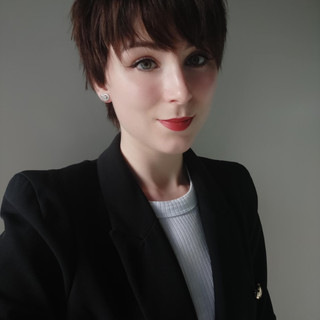

Alex Blau is a behavioral scientist working at the intersection of research, design, and product strategy. He helps organizations understand why people are not taking desired actions, then redesigns products, services, and experiences to make those behaviors more likely. At Irrational Labs, he leads engagements for clients including Intuit, Salesforce, and Serko, using behavioral diagnosis, mixed-methods research, and deign to improve customer and business outcomes. Earlier in his career, he spent a decade at ideas42, where he built a globally distributed research team, led a Gates Foundation-funded fintech portfolio across South Asia, and published in Harvard Business Review. He also founded Vergil, a reentry services platform backed by Schmidt Futures and the U.S. Department of Justice. He holds degrees from Tufts University and Brown University.
Who or what got you into behavioural science?
I came to behavioural science through economics, and more specifically through a moment where economics stopped being enough. I did my master’s in food policy and applied nutrition at Tufts, which was essentially an economics programme focused on food systems. After graduating, I worked as a research assistant evaluating large, multinational food aid programmes that had been operating for years and then suddenly lost funding. Because of a reappropriation of US aid dollars, these organisations exited countries almost overnight, which gave us a rare opportunity to see whether their “sustainability plans” actually held up.
What fascinated me was farmer behaviour after these programmes left. Farmers had the resources, the knowledge, and prior experience with improved inputs, yet many reverted to older practices. As a classically trained economist, I had no good lens to explain that. There was no information asymmetry, no obvious constraint. That was when I encountered behavioural science and realised there was an entire field trying to explain exactly the puzzle I was facing. I applied to ideas42 in 2013, joined as one of the early employees, and never looked back.
What accomplishment are you proudest of as a behavioural scientist? And what would you still like to achieve?
The project I’m proudest of is one I worked on toward the end of my time at ideas42, when I made a deliberate decision to stop consulting and start building products. Consulting gives you one shot: you design an intervention, hand it off, and move on. But I’ve always believed that the best behavioural outcomes come from iteration—being able to fail, learn, adjust, and improve over time.
I helped launch an internal venture studio at ideas42 and built a product called Virgil, designed to support formerly incarcerated people transitioning out of prison. We partnered with the Alameda County Probation Department and received funding from the Department of Justice. The core insight was that people coming out of the system often face massive executive function demands in a hostile environment: new technologies, stigma, fragmented services, and complex requirements. Many are neurodivergent, dyslexic, or dealing with mental health challenges.
Virgil acted as a kind of “external executive function,” linking referrals from probation officers to concrete, actionable steps that helped people actually engage with support services. We significantly reduced time to engagement, which was deeply meaningful to me. It felt like behavioural science at its best: identifying a real problem, designing for context, building something scalable, and helping people navigate genuinely difficult circumstances.
What I still want to achieve is building a full behavioural science programme inside a product organisation—one that integrates research, design, experimentation, and decision-making under a single, coherent framework. That, to me, is where the field can have its biggest impact.
How do you think behavioural science will develop in the next 10 years?
I’m very optimistic about the future of behavioural science, particularly as it intersects with technology. One of our biggest limitations today is that we design for average treatment effects, which are abstractions—not real people. The real challenge is delivering the right intervention to the right person at the right time.
This is where AI becomes genuinely transformative. Humans aren’t very good at managing that level of complexity deterministically, but machine-assisted systems can help us identify heterogeneous effects, update priors, and continuously learn from outcomes. Behavioural science paired with AI creates the possibility of individualised interventions that still scale.
I’m also excited about generative user interfaces and outcome-oriented design. We’re moving away from static tools toward systems that adapt to the user. That fundamentally changes product-market fit: the product can fit to you, rather than the other way around. From a behavioural perspective, that’s incredibly powerful.
That said, we still need strong mental models of how the world works. Current AI systems are excellent at prediction but weak on underlying causal understanding. Behavioural scientists play a critical role in grounding these systems in real human contexts. Over the next decade, I expect behavioural science to become more embedded, more adaptive, and more personalised—less about isolated nudges and more about continuously learning systems.
What are the greatest challenges facing behavioural science right now?
One of the biggest challenges is our lack of a unified, explanatory theory of behaviour. We have many mechanisms and effects that work under specific conditions, but no integrated model that offers the explanatory power economists get from classical theory. That limits how far we can push the field.
Another challenge is our over-reliance on mechanisms as explanatory shortcuts. Early in my career, naming biases was helpful for credibility and communication. But when it comes to designing interventions, mechanisms often don’t get you to the right feature of the environment. You need to understand what’s actually driving behaviour in context, not just label it.
The replication crisis is also part of this conversation, but I see it more as an indictment of academic publishing incentives than of behavioural practice itself. Applied behavioural science works. We change behaviour at scale. The problem is where we focus our scrutiny.
Finally, we need to do better at accounting for human variance—neurodiversity, context sensitivity, and individual differences. Designing for averages hides important effects. If behavioural science is going to mature, it needs to grapple seriously with heterogeneity and complexity.
With all your experience, what skills are needed to be a behavioural scientist? Any recommendations?
The strongest behavioural scientists I know sit at the intersection of rigorous analytical thinking and creativity. You need both. Quantitative skill matters—not because numbers tell you everything, but because probabilistic thinking helps you prioritise, focus, and avoid solving irrelevant problems. Being able to think in terms of uncertainty and expected value is invaluable.
At the same time, creativity is essential. Even the best quantitative researchers are creative in the questions they ask. In applied behavioural science, you’re constantly dealing with ambiguity. You need to be able to impose structure on messy contexts, explore them thoughtfully, and remain open to details that initially seem irrelevant but turn out to be crucial.
Qualitative skill is just as important. Numbers won’t tell you how people are deciding. Process-oriented methods—observation, interviews, synthesis—are what allow you to design meaningful interventions. The challenge is that mastering all of this takes time. At ideas42 we used to joke that it took about two years to “fully bake” a behavioural scientist, and even then, real intuition takes five to ten years of exposure.
My recommendation is to start with yourself or with problems close to you. Design for your own behaviour. That gives you more repetitions—more “reps”—than waiting for six-month projects. Those skills scale surprisingly well.
What advice would you give to young behavioural scientists?
My main advice is to design for the context you’re closest to. Your own behaviour, your own environment, or problems you see every day. The mental models you have about your own life are far richer than those you can quickly build about distant contexts. Use that to your advantage.
Combine quantitative measurement with careful observation. Ask what features of the environment are driving behaviour and what levers you can realistically pull. Don’t wait for perfect data or prestigious projects. Skill comes from repetition and reflection, not credentials alone.
Finally, be patient. This field rewards accumulated experience. Strong intuitions only emerge after years of seeing patterns repeat across contexts. There’s no shortcut—but it’s a deeply rewarding journey if you stay curious.
If you weren’t a behavioural scientist, what would you be doing?
I almost became a farmer. During my master’s, I got very interested in urban hydroponic farming—turning rooftops into productive spaces. That said, if I were starting over today, I’d probably become an engineer. I would want to combine computing with industrial or product design. Looking back, I’m very drawn to the ability to build things with both technical depth and human-centred intent. Behavioural science scratched that itch intellectually, but engineering would have given me harder technical skills earlier on.
How do you apply behavioural science in your personal life?
I apply behavioural science to myself constantly. After being diagnosed with ADHD as an adult, I started thinking about my life as a design problem. I’m very good at entering flow states, but only under extreme time pressure, which isn’t sustainable. So I’ve been building low-friction systems around myself: capturing tasks the moment they arise, externalising memory, and creating daily reflection rituals.
For example, I use phone-based dictation tied into automated workflows that log tasks instantly. I’m now building morning and evening conversational check-ins to plan and reflect. The goal is to be more metacognitive about my own behaviour and deliberately shape my environment to support better outcomes.
What is your biggest frustration with the field as it stands?
My biggest frustration is how visibility works in the field. Social media rewards the loudest voices, not necessarily the most thoughtful or impactful practitioners. There are many deeply talented behavioural scientists doing excellent work who don’t get attention because they’re heads-down.
That said, I’ve found behavioural science to be an unusually kind and welcoming field. The people are curious, generous, and genuinely interested in improving human outcomes. That’s something I value enormously, even as I remain sceptical of how influence and recognition are currently distributed.
Which other behavioural scientists would you love to read an interview by?
There are many behavioural scientists who have shaped how I think, but a few stand out. Piyush Tantia was an early mentor of mine and someone I deeply admire. He has an exceptional ability to connect behavioural theory to real-world design in a way that’s both rigorous and humane.
Another person who had a profound impact on me is Marina Dimova, who works at Women’s World Banking. She is one of the best qualitative synthesisers I’ve ever met. Marina could conduct interviews and extract insights that directly informed design decisions with remarkable clarity. Watching her work taught me how powerful qualitative skill can be when done well.
I’d also recommend Katie Davis, a former managing director at ideas42 who now leads UX at USAA. She’s incredibly sharp and thoughtful about how behavioural insights integrate into large, complex organisations.
What connects all of these people is not just intelligence, but judgement—the ability to decide what matters, what doesn’t, and how to translate insight into action. Those are the behavioural scientists whose work I find most inspiring.
Thank you so much for taking the time to answer my questions Alex!
As I said before, this interview is part of a larger series which can also be found here on the blog. Make sure you subscribe so you don't miss any of those, nor any of the upcoming interviews!


Comments