Interview with Herman Smit
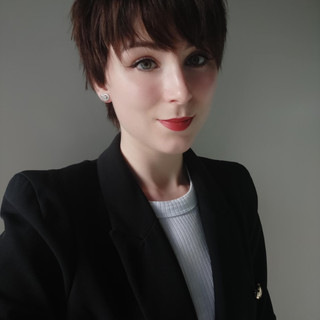
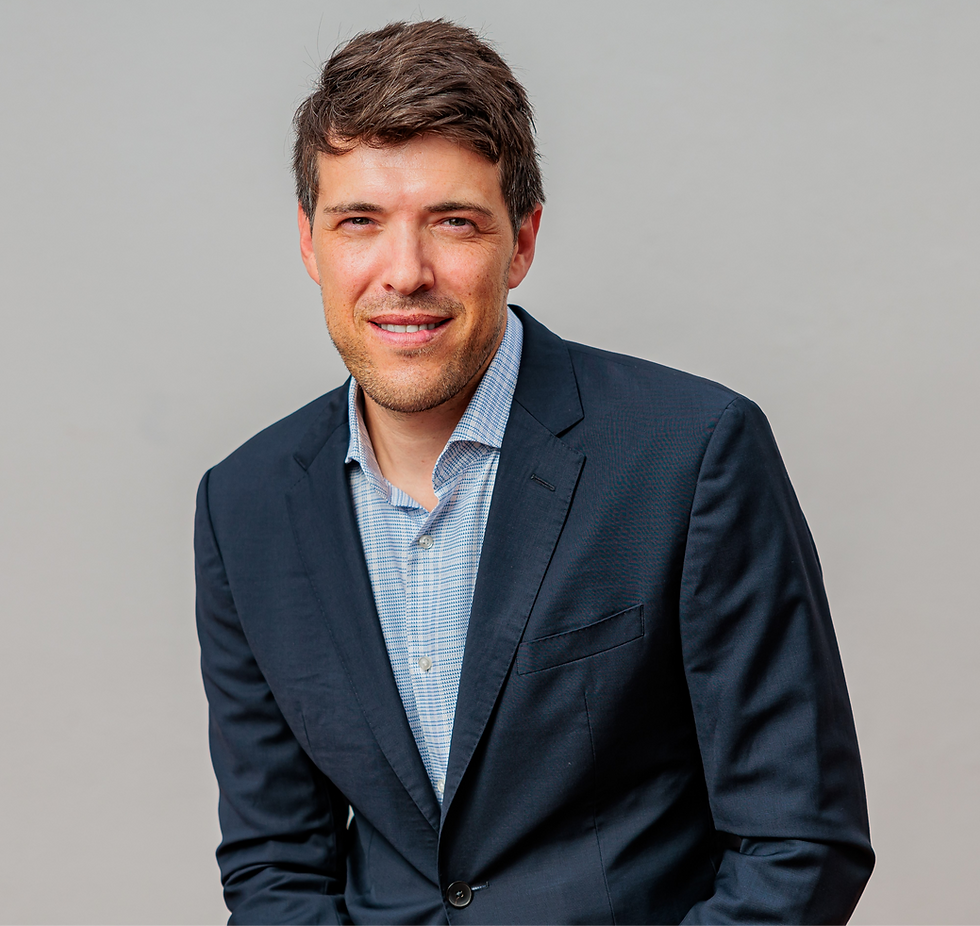
Herman Smit heads the Behavioural Economics Centre of Excellence at Nedbank, where he leads initiatives to drive positive behaviour change for both clients and staff by embedding the practice across the organisation. In addition to his role at Nedbank, he serves as a scientific advisor for agentic behaviour at Fae, an AI-native money companion startup, and is a research affiliate at the Cambridge Centre for Alternative Finance.
Who or what got you into behavioural science?
I’m a converted economist. As an undergrad student back in 2002, the traditional models felt like they were describing someone I couldn’t really relate to. I loved the elegance of economics and how it explained the world, but I struggled with the assumptions about how people behave.
My real pivot happened while working in development economics across Latin America, Africa, and Asia, helping governments and regulators improve access to financial services. We saw incredible growth in financial inclusion globally, but what increasingly troubled me was that access alone wasn’t reliably improving people’s lives. In some cases, people were actually worse off.
That triggered an obsession with the psychology of usage—what happens when people actually engage with financial products under conditions of stress, scarcity, and limited resources. I still vividly remember attending a lecture by Sendhil Mullainathan just before Scarcity was published. Along with books like Thinking, Fast and Slow, Poor Economics, and Nudge, it completely changed how I thought about financial behaviour.
In South Africa, the establishment of RUBEN—the Research Unit in Neuro and Behavioural Economics at the University of Cape Town under the late Justine Burns—also gave me the confidence that this field had the leadership and credibility needed locally, and that it was something worth fully pursuing.
What is the accomplishment you are proudest of as a behavioural scientist?
I think what I’m proudest of is helping institutionalise behavioural science across very different environments. I’ve had the privilege of establishing behavioural science units in a think tank, a people-tech startup, and now at Nedbank.
At Nedbank, one of the things I’m most proud of is the capability-building side. In partnership with the University of Cape Town, we’ve trained nearly 4,000 staff members in behavioural science fundamentals. And for me, some of the most rewarding moments are still seeing people suddenly understand themselves and their clients differently.
I’m also incredibly proud of the work we’re doing around human and agentic decision-making. A big focus for me is understanding how AI changes judgement, cognition, workplace dynamics, and financial behaviour, and helping organisations navigate that responsibly.
Looking ahead, I see my role as continuing to act as a bridge between the evolution of the science and the practical realities of large organisations. I think the next decade is going to fundamentally reshape both work and financial decision-making through AI and agentic systems, and I’d like behavioural science to remain central to shaping that transition in ways that genuinely improve human wellbeing and financial health.
With all your experience, what skills would you say are needed to be a behavioural scientist? Are there any recommendations you would make?
I’ve always found the Behavioural Insights Team five-skills framework to be a really good North Star. You can’t just be a great scientist, you also need to know how to get things done in messy real-world systems.
A huge part of the role is taking people along on the journey. You’re constantly trying to help individuals and organisations see the world differently, and that requires communication, influence, stakeholder management, and practical problem-solving alongside the science itself.
More recently, I’d also add AI capability building to that list. My teams are building agents and integrating them into workflows daily. I genuinely think this is becoming central to the future of the field, and there’s no time like the present to start building those skills.
What are the biggest challenges for behavioural science?
I think the challenge exists at both a human and an organisational level.
At a human level, behavioural science fundamentally challenges people’s sense of control. Humans work very hard to create feelings of certainty, stability, and understanding about themselves and the world. And what behavioural science often does is disrupt that. It tells people that their judgement is fallible, that they’re influenced in ways they don’t fully perceive, and that can be deeply uncomfortable.
Even now, after years of capability-building, I still see people resist these ideas. We’re currently doing work around AI and what I sometimes call “System 3” thinking: how artificial intelligence shapes judgement and cognition, and even people who fully embraced behavioural science initially can become hesitant again when they realise AI may also be influencing their thinking and decisions.
At an organisational level, behavioural science is also difficult because it doesn’t fit neatly into traditional structures. Behaviour cuts across everything: client experience, fraud, compliance, staff productivity, revenue, risk. So organisations often struggle with where behavioural science should sit, how success should be measured, and who owns it.
And increasingly, the challenge is no longer just about insight generation. Basic behavioural knowledge is widely accessible now. The real challenge is becoming an actual agent of change—embedding these insights into systems, products, governance, and organisational behaviour in ways that genuinely improve outcomes.
How do you think behavioural science will develop in the next 10 years?
If you’d asked me 10 years ago whether behavioural science would be this widely adopted across governments, banks, retailers, and large corporates, I don’t think I would have predicted it. The scale and speed of adoption have been remarkable, especially in financial services.
Looking forward, I think there are two big areas of evolution. The first is the science itself. Right now, we still have relatively blunt models of cognition and decision-making. System 1 and System 2 have been incredibly useful shortcuts, but I suspect we’re moving toward a much richer understanding of how cognition actually works.
I often think about the analogy that before we understood that the Earth rotates around the sun, we had to explain all these anomalies in planetary movement because the core theory was wrong. I think behavioural science is still in a somewhat similar phase; we have many observed effects and biases, but not yet a fully unified theory of cognition.
The second major shift is on the execution side. Right now, behavioural interventions are still often designed around average effects across populations. But increasingly, AI and richer behavioural data will allow for much more personalised interventions, potentially down to the level of the individual.
That means moving from broad nudges to much more adaptive and context-specific behavioural support systems. And I think that has enormous implications, not just for financial services, but for healthcare, education, public policy, and workplace behaviour more broadly.
What advice would you give to young behavioural scientists or those looking to progress into the field?
Expect things to change quickly. While behavioural science has already had a major impact, many of our tools are still relatively blunt. I think we’re approaching another major leap, both scientifically and technologically.
So my advice would be to stay grounded in what actually matters: driving measurable positive behaviour change in the real world. Don’t get too attached to specific frameworks or tools, because those will evolve.
And practically, learn how to operate in messy systems. The science matters enormously, but so does the ability to bring people along, build capability, and translate insights into something organisations can actually implement.
What are your biggest frustrations with behavioural science, as it currently stands?
I think the biggest frustration is that the field is still widely misunderstood. We’ve made enormous progress, but there are still many misconceptions about what behavioural science actually is and what it can contribute.
Those misunderstandings create a ceiling on the field’s potential. They can reduce behavioural science to a collection of nudges or tricks, rather than recognising it as a fundamentally different lens for understanding human judgement, decision-making, and systems.
And because the field cuts across so many domains, it can sometimes struggle to find a natural institutional home. That ambiguity can make it harder to scale, harder to govern, and harder to integrate meaningfully into organisations.
If you weren’t a behavioural scientist, what would you be doing?
Honestly, I feel like I was probably destined to end up in this profession. It resonates with me so deeply that even navigating large bureaucratic institutions still feels purposeful because of the work itself.
But if I had to choose another path, I’d probably be a stay-at-home dad who spent all his spare time reading journal papers on human judgement and decision-making anyway.
How do you apply behavioural science in your personal life?
I’m lucky enough to be married to a brilliant behavioural scientist—Kate Rinehart-Smit—and we have two young children, Hopper and Sims, who are already experts at behavioural techniques despite their age. So there’s a lot of “BS” happening in our household.
More seriously, I think behavioural science changes how you understand both yourself and other people. Once you really internalise that judgement and decision-making are fallible, it creates more compassion. You stop expecting yourself or others to behave like perfectly rational actors.
Which other behavioural scientists would you love to read an interview by?
You’ve already built a really strong list. But if we could go beyond this world, I would have loved to read an interview with Amos Tversky.
He was a total maverick, and I think that kind of energy; the willingness to challenge assumptions and rethink how humans actually behave, is exactly what the field needs right now.
Thank you so much for taking the time to answer my questions Herman!
As I said before, this interview is part of a larger series which can also be found here on the blog. Make sure you don't miss any of those, nor any of the upcoming interviews!
Keep your eye on Money on the Mind!


Comments