Interview with Jaclyn Kalter
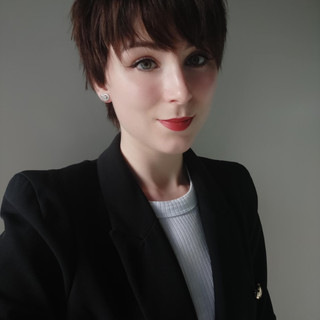

Jaclyn Lefkowitz Kalter is a Behavioral Science Manager at Vanguard, where she bridges behavioural science, analytics, and UX to help clients make smarter financial decisions — including a cross-functional programme that drove $91 million in incremental investments in its first 30 days. Before Vanguard, she consulted at the World Bank and spent five years at ideas42, applying behavioural insights across consumer finance, government, and healthcare. She holds a Master in Public Policy from Harvard Kennedy School.
Who or what got you into behavioural science?
I started in high school with a psychology course and just fell in love with it. At the time, I was thinking about it more from a consumer behaviour and marketing lens, which was the main applied path back then.
The shift came in my senior year of college when ideas42 came to campus. That’s when I was introduced to behavioural science beyond marketing—more into public policy and broader applications. I was drawn to the blend of research, practical application, and passion for making positive real-world impact. Starting my career at ideas42 set me on this path of applied behavioural science for social impact.
What is the accomplishment you are proudest of as a behavioural scientist?
After spending time in behavioural science consulting, I decided to make a move to in-house behavioural science, assuming that could help with some consulting challenges like going from insight to application and iterating over time. I think I was a little naive in believing going in-house could automatically solve those challenges. There was a learning curve for me in figuring out what good, cross-functional collaboration actually looks like.
The accomplishment that I’m proudest of is one that unintentionally tackled the question of how to collaborate across teams to improve the flow from problem discovery, to solution discovery, to delivery. The initiative focused on defining optimal financial behaviour, comparing it to what people actually do, and then closing that gap through the client experience. It started as a small, cross-functional setup—a data analyst, a UX researcher, and myself—and we spent a lot of time figuring out how to work together and where each of us adds value.
We built a blended approach, grounded in behavioural science but integrated with analytics, UX, and financial methodology, and adapted to a product environment. The first use case—a cash drag experiment—drove $91 million in incremental investments after 30 days, and it’s since scaled into business-as-usual. But what I’m most proud of is how that’s grown into a much larger program, with multiple disciplines all working together to better understand what drives our clients’ financial decision making and behaviour, and test evidence-based behavioural designs to improve their financial outcomes.
Looking ahead, the big question is scale. It’s still quite a resource-intensive way of working, so a lot of the focus now is how we bring that approach to more parts of the business, whether that’s through more embedding, or through tools and systems that allow others to apply that behavioural lens themselves.
So I think the next step is less about which use cases to focus on and more about how this becomes a more scalable, repeatable way of working across the organisation.
What skills are needed to be a behavioural scientist?
There are the obvious ones—behavioural science knowledge, mixed methods research, experimental design.
But I don’t think those will be the main differentiators going forward, especially with new tools supporting some of that work.
What really stands out are the leadership-type skills: being able to influence, think in a business context, and bridge the gap between insights and what’s actually feasible. A lot of the job goes beyond research; it’s working with stakeholders, getting them on board, and translating insights into something that fits their priorities and constraints. It’s not enough to be a strong researcher, you need to be effective in the system you’re operating in.
How do you think behavioural science will develop (in the next 10 years)?
I think a lot about how organizational and operating models may evolve when it comes to the future of behavioural science. I don’t think there’s one clear path for where behavioural science will sit; it already varies a lot across organisations, whether that’s in UX, data science, design, or elsewhere. What feels different now is how quickly things are evolving, especially with Gen AI. Even a few months ago, I might have given a more stable answer, but now I see a lot more role blending happening.
I can see a future in which you’ll still have behavioural scientists, but you may also have other roles bringing in a behavioural lens—and vice versa. These tools might make it easier to integrate across disciplines and adopt different ways of working.
So I see less of a standalone team-only model and more of something that also becomes embedded across functions, depending on the organisation and its priorities.
What are the biggest challenges for behavioural science?
It’s a good question. What I see most often is around how clearly we’re able to connect the outcomes of behavioural science to business priorities. We’re always trying to find those win-win opportunities—client value and business value—and a big part of the challenge is just making that case convincingly.
There’s also often a perception that if research is involved, it’s going to slow things down and delay getting to launch and delivering value. So part of the challenge is showing that investing upfront in understanding the problem can actually reduce the risk of building the wrong solutions and having to redo them later.
Another big challenge is how behavioural science operates within organisations. In our case, we function as an advisory group. So to move from insights to real-world impact, we have to bring business partners along with us and make research efforts highly collaborative from the start.
In cases where it’s more challenging to go from insight to real-world application, it’s usually not about a lack of interest, it’s more about competing priorities. Teams have full roadmaps, other initiatives take precedence, and it becomes a question of timing and fit: how do you align with what they’re already trying to do?
Related to that, there’s also the question of attribution. When you’re working cross-functionally, how do you attribute value? Who owns the outcome?
If you focus too much on clean attribution, you can actually limit collaboration. So there’s a trade-off between doing integrated, impactful work and being able to clearly point to what portion of the outcomes specifically came from behavioural science.
So I’d say the challenges are less about the science itself, and more about how it operates in real systems—how it’s integrated, how its value is understood, and how it actually gets implemented.
What advice would you give to young behavioural scientists?
Do a lot of research on the different paths into the field: university programs, consultancies and organisations, internal teams, because they can vary a lot in how they actually apply behavioural science.
Talk to people in roles you’re interested in and understand their day-to-day work.
Also think about where you’ll get the best training. Larger consultancies can be a great place to start because of the mentorship and structure.
And don’t just focus on technical skills—look for ways to build influence and stakeholder skills in whatever role you’re in. You can start practising that even outside of a behavioural science job.
What are your biggest frustrations with behavioural science, as it currently stands?
One frustration is that the applied field has sometimes limited itself to focusing on clean, perfectly measurable opportunities, which can box practitioners into testing small changes.
That can mean turning down messier, yet important, systems- and journey-level problems, or nontraditional applications like a behavioural lens for upstream business strategy, because they don’t fit neatly into a framework like a randomized controlled trial.
In those cases, we may need to be more flexible in our methods because that’s where a lot of real-world impact sits. This isn’t to say that accurate evaluation isn’t important, rather we should be conscious of when it acts as a constraint for where and how behavioural science can play a role.
I do think there’s been some shift in that direction within the applied community, but in the past it’s been a limitation.
If you weren’t a behavioural scientist, what would you be doing?
I’ve thought about two very different paths. One would have been something in medicine—maybe psychiatry or another healthcare field.
The other is completely different—interior design. I’ve always enjoyed thinking about spaces and the experiences you can create with them.
How do you apply behavioural science in your personal life?
A lot of commitment devices—telling friends or family I’m going to do something to hold myself accountable.
I also rely heavily on structuring things—putting everything in my calendar and basically turning my to-do list into implementation intentions.
And then things like temptation bundling—for example, watching a show while doing routine tasks like prepping meals.
Which other behavioural scientists would you love to read an interview by?
Jess Leifer—she was a mentor of mine at ideas42 and now runs a government behavioural science team in Canada. I would highly recommend talking to her to get the perspective of behavioural science applied to public policy.
Thank you so much for taking the time to answer my questions Jaclyn!
As I said before, this interview is part of a larger series which can also be found here on the blog. Make sure you're subscribed so you don't miss any of those, nor any of the upcoming interviews!


A useful page to keep in mind is this encoding and decoding utility, which processes everything client-side. That makes it a solid choice for handling files and strings without worrying about server-side storage.