Interview with Katy Irving
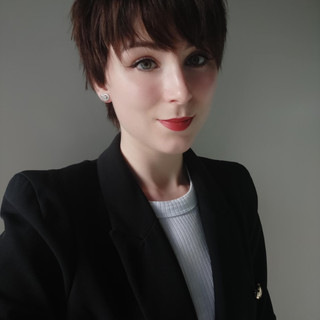

Katy is Global Head of Behavioural Science at Healthcare Research Worldwide (HRW) and founder of HRW Shift — a 16-strong in-house team dedicated to behaviour change in healthcare. Armed with an MSc in Communication specialising in quantitative research and semiotics, Katy bridges academia and industry to deliver evidence-based behavioural science to clients across pharma, OTC healthcare, and diagnostics. Her approach is rigorous, cross-disciplinary, and always grounded in validated frameworks. A recognised voice in the field, she has spoken at UCL, LSE, Google, BHBIA, EPHMRA, BSPHN, Intellus Worldwide, and universities across Europe — and is a two-time winner of the EPHMRA Best Paper at Conference award.
Who or what got you into behavioural science?
Like so many people in the field, I kind of fell into behavioural science. I studied communication originally, but outside of university I was constantly reading what I’d now call “pop behavioural science” books—things like Freakonomics, The Undercover Economist, and The Logic of Life. I just consumed those books obsessively and started trying to apply some of those ideas in my everyday work.
Over time, I became more connected with people from psychology and behavioural economics backgrounds, and eventually with universities and conferences working in this space. That interest kept growing, and in 2016 I approached the leadership team at HRW about creating a behavioural science practice. At the time, behavioural science still wasn’t an easy sell—you often had to start from zero and explain what the field even was.
A lot of the early work involved reframing client problems through a behavioural lens—showing them the biases, frictions, and contextual factors shaping the behaviour they were struggling with. Once clients saw behavioural science connected to real business and healthcare problems, that’s when it really started to land.
What is the accomplishment you are proudest of as a behavioural scientist, and what do you still want to achieve?
I think what I’m proudest of is building the behavioural science team at HRW and seeing how integral it’s become to the organisation and the wider healthcare research industry.
At the beginning, we were constantly trying to convince people that behavioural science had value. Then there was a period where we had to win over sceptics who’d had bad experiences with very narrow or superficial applications of behavioural science. And now we’re in another phase again, where we’re having to explain the value of human behavioural science expertise in a world increasingly fascinated by AI.
What’s been incredibly satisfying is watching behavioural science genuinely “click” for clients—especially the sceptical ones—and then seeing the kinds of tools and approaches we pioneered become much more widely adopted across the industry.
But honestly, the thing I’m proudest of is the team itself. I feel incredibly privileged to work alongside people who are so curious, applied, collaborative, and genuinely passionate about continuously learning and improving. They constantly push themselves and the field forward.
Looking ahead, I really want us to continue pushing the boundary between theory and application. That means doing more sophisticated intervention design, more simulated experimentation, more co-design and implementation work, and also using AI thoughtfully and responsibly to support behavioural science rather than replace it.
A big goal for me is making sure behavioural science continues to stay on the leading edge—keeping pace with changes in AI, refining the frameworks we use, and continuing to demonstrate meaningful real-world value rather than letting the field become diluted into simplistic “bias spotting.”
What are the biggest challenges for behavioural science?
The biggest challenge is that behavioural science is constantly having to justify and redefine its value. Early on, we had to convince people the field mattered at all. Then we had to deal with scepticism from people who’d experienced poor or superficial applications of behavioural science. And now we’re increasingly navigating a world where AI is being positioned as a replacement for behavioural expertise.
I also think one of the challenges is that people often reduce behavioural science to “spotting biases” or applying a single framework mechanically, rather than understanding behaviour holistically and contextually.
And then there’s the broader issue of maintaining scientific rigour while still being practical and commercially useful. We have to stay on top of replication issues, evolving evidence bases, and methodological quality without becoming so academic or overcomplicated that clients disengage from the work.
With all your experience, what skills would you say are needed to be a behavioural scientist? Are there any recommendations you would make?
The entry-level requirement now is really just having broad behavioural science knowledge. Most people applying for behavioural science roles already know the major frameworks, heuristics, and theories.
What differentiates people now is their ability to apply that knowledge well. That means being able to recognise patterns quickly, explain them simply, and connect them to the bigger behavioural problem you’re actually trying to solve.
A huge part of the role is moving from theory to practice. Some people are incredibly knowledgeable academically but struggle when asked to turn that into meaningful intervention design or practical recommendations.
I also think creativity is underestimated. Great behavioural scientists don’t just identify a bias or framework—they can creatively translate that into something useful, practical, and contextually appropriate.
And for people entering the field, my advice would be not to focus exclusively on jobs with “behavioural science” in the title. Those roles are much more competitive now. Instead, build experience applying behavioural science wherever you are—marketing, strategy, communications, product design—and create opportunities internally.
How do you think behavioural economics will develop in the next 10 years?
I have mixed emotions about the future of the field. On one hand, I still see enormous opportunity for behavioural science because there are so many interventions and systems that continue to fail simply because they haven’t properly considered human cognition and decision-making.
So I absolutely believe the value of behavioural science will continue to grow. But I am nervous about AI being treated as a substitute for genuine behavioural science expertise.
At the same time, AI also creates huge opportunities for the field. A lot of the success or failure of AI tools ultimately comes down to implementation, adoption, trust, and human behaviour—which are behavioural science problems.
I also think AI is going to transform the kinds of methodologies we can use. We’re already experimenting with AI-powered patient and doctor avatars, simulated consultations, richer contextual environments, and new ways of testing behavioural interventions in healthcare research.
So I think the field will evolve quite dramatically, but I’m optimistic that behavioural science will remain highly relevant—particularly if we continue adapting rather than becoming overly rigid or academic.
What advice would you give to young behavioural scientists or those looking to progress into the field?
I think one of the biggest things is understanding that applied behavioural science often looks very different from academia. A lot of graduates come in expecting industry work to be constant RCTs and tightly controlled experiments, and that’s just not the reality for many organisations.
Commercial environments move faster, have more constraints, and require much more flexibility in methods and implementation.
So my advice would be to build exposure to practical applications as early as possible. Go to industry talks, work on applied projects, experiment within your current role, and learn how behavioural science gets translated into real business and healthcare settings.
And again, don’t wait for the perfect “behavioural scientist” title. Some of the best people I’ve seen have created those opportunities for themselves internally by bringing behavioural thinking into adjacent roles.
What are your biggest frustrations with behavioural science, as it currently stands?
One of my biggest frustrations is the tendency to overcomplicate things unnecessarily.
There are definitely situations where very fine-grained theoretical distinctions are useful analytically, but sometimes the field becomes so rigid or subdivided that it actually makes behavioural science harder for clients and organisations to engage with meaningfully.
Related to that, I really dislike when people invent new biases, frameworks, or terminology without a strong evidence base behind them. We already have enough issues with replication and conceptual overlap without people creating entirely new concepts based on very limited evidence.
I think behavioural science is most valuable when it helps simplify and clarify human behaviour—not when it becomes overly academic, jargon-heavy, or unnecessarily fragmented.
If you weren’t a behavioural scientist, what would you be doing?
Honestly, I’d probably still be doing something very similar. I’ve always loved taking ideas and frameworks from academia and applying them to real-world problems. Even before behavioural science became my focus, I was already doing that through communication and healthcare market research.
I’ve also always worked quite closely with innovation and technology, so I suspect I still would have ended up somewhere at the intersection of research, strategy, and applied innovation.
How do you apply behavioural science in your personal life?
I definitely do apply it, although probably imperfectly. I’m very habit-oriented and tend to think quite deliberately about routines, reinforcement, and setting up systems that make behaviours easier.
So things like habit formation, progress tracking, setting up cues for behaviours, structuring routines for language learning or going to the gym—those kinds of applications come quite naturally to me.
That said, there are definitely moments where I look back afterwards and think, “I absolutely had a framework for this and still didn’t apply it properly.” So I think all behavioural scientists are at least slightly hypocritical sometimes.
Which other behavioural scientists would you love to read an interview by?
I really admire Katy Milkman. I think her work is fantastic, but what I especially appreciate is how collaborative and generous she is in acknowledging other researchers and practitioners.
I’d also highly recommend Elina Halonen. She has an incredible breadth of behavioural science knowledge and is very good at turning that into practical tools and applications. I really admire how openly she shares those resources and contributes to the field more broadly.
And more generally, I think the field advances best when people collaborate and share ideas rather than treating frameworks and tools as proprietary assets.
Thank you so much for taking the time to answer my questions Katy!
As I said before, this interview is part of a larger series which can also be found here on the blog. Make sure you're subscribed so you don't miss any of those, nor any of the upcoming interviews!


Sau khi thấy một vài người chia sẻ, mình cũng vào f168.vision xem qua để tham khảo cách họ làm giao diện và phân chia chuyên mục. Cảm nhận ban đầu là trang web trình bày rất mạch lạc, bố cục cân đối và chia khu vực rõ ràng nên nhìn rất thoáng mắt. Thanh điều hướng cũng được làm trực quan, hiển thị đủ danh mục nên việc thao tác hay chuyển đổi giữa các phần nội dung cực kỳ nhanh chóng và thuận tiện.