Interview with Alex Clark
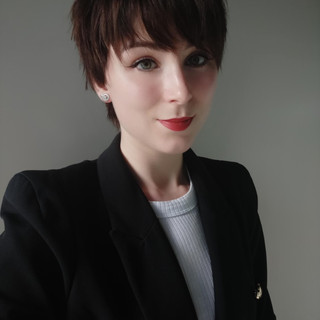

Alex is the Head of International Asia-Pacific, and oversees projects around the region, from Hong Kong to Pakistan. He helped establish the BIT Singapore office in 2016, and spent several years working with the Singapore government applying behavioural insights to a range of public policy issues. In 2023 he took on a portfolio of international work involving governments, private sector partners and financial institutions, as well as civil society organisations. He has led work on financial regulation and behavioural risk, environmental conservation projects, public health projects, and improved governance and administration using behavioural science insights. He is interested in how changes in choice architecture can help people to make better decisions - whether they are households, bank staff, or public officials. Before joining BIT, Alex worked at the Bank of England on big data and regulatory projects, including UK Stress Testing and the SONIA benchmark surveillance. His background is in Sociology and Social Anthropology. Loving the interview series? They have now been turned into a book! Order it here.
Who or what got you into behavioural science?
I used to work at the Bank of England, and I managed to convince my managers to let me spend one day a week in the research department. Whilst I was there, we had some external visitors that nobody else really wanted to deal with since they weren’t economists. At the time I was maybe the only person in the department without an economics background - I studied sociology and social anthropology - so I was sent as tribute. I met two people from the Behavioural Insights Team who wanted to talk about applying behavioural economics to things like monetary policy transmission and financial regulation. I found it genuinely exciting, and my interest was cemented a week or two later when I called one of them with a knotty problem I was wrestling with on firm supervision. We spent an hour and a half just talking through different behaviours, choices and responses, and it hit me that this was his actual full time job, getting to sit and think about how human beings make decisions and how we can help them in making better decisions. I remember thinking that sounded like a great job, and that I wanted to do it too.
From there I read more about BIT and realised it had exactly the ethos I was drawn to, a public service mission with real social impact. When a job opening eventually came up, I applied, even though the position offered was not quite right for that point in my career, because I wanted to find out more about what BIT was like. During the interview process I mentioned, in passing, that I'd grown up in Singapore, and it turned out BIT was just about to open an office there. They asked if I'd be interested, I said yes, and a few days later I got a call from Sam Hanes, who at that point was the one person I actually knew at BIT, asking if I wanted to come and help set up the Singapore office. So I applied for a job I didn’t want, and got offered a job I did want by the person who led me to apply for the job in the first place - basically, I was very lucky!
What is the accomplishment you are proudest of as a behavioural scientist, and what do you still want to achieve?
One of the things I'm proudest of is the work we've done on conduct and culture, primarily in the Singapore market. We've been fortunate to have forward thinking partners on both the industry and regulatory sides, and over the last five or six years we've helped banks build behavioural science informed frameworks for understanding what drives risk, how organisational culture emerges as a complex adaptive system, and how you steer it rather than simply try to fix it. A lot of that comes back to reframing what used to be called conduct risk, and what we're increasingly calling behavioural risk, around the idea that it's bad systems, not bad apples. It means a lot to me because these are problems I first started thinking about at the Bank of England when working on stress testing, which too often treated a firm's risk as an accounting exercise, when what actually matters is how people behave once the pressure hits. I'm proud that we've contributed, in some small way, to industry recognising that gap.
More broadly, I'm proud of bringing a behavioural lens to areas that hadn't really had one before, so non-financial risk in banking, wildlife conservation, even state capacity and public administration through our work on tax compliance. You called this “problem pioneering” which I like as a term.
I want to achieve more evidence-based decision-making. Behavioural science is kind of like a Trojan horse for evidence-based policy: a way of getting people in the door, say by showing how a change to a reminder increases tax revenue, and then, once you're inside, what actually comes out is evidence based policymaking about fiscal policy, administration and implementation. That's the real goal, a place where senior decision makers can draw on real, in context evidence about what works and why, with a feedback loop tight enough that we're not necessarily making fewer bad decisions, but at least we are correcting them much faster.
What are the biggest challenges for behavioural science?
Showing the importance of context. In some ways, this has always been the point of the field - showing how decision-making is affected by the environment, by the decision-making context. However, behavioural science reached many people through the “one neat trick” era: everyone loves a simple answer, and early on a lot of energy went into finding cool, intuitive solutions that were great at generating interest but make it all seem simpler than it is.. The field is slowly moving away from single silver bullet thinking toward something more holistic, where an individual result isn't the output, it's an input into a much bigger evidence generating process that feeds strategy and the next round of questions. That's harder to say in one sentence, which makes it harder to sell, but it's where the real value is: helping decision-makers understand the contextual drivers of behaviour so their policy or their governance can change the behaviours it wants to change.
As part of that challenge on context is a point about generalisability. It is true that a lot of behavioural science evidence comes from a narrow slice of the world, broadly Western, educated, industrialised, rich and democratic contexts, and there are legitimate questions asked about how well that translates elsewhere. I've come to think the more useful lens isn't country versus country though, it's context. A rich Singaporean, a rich Indonesian and a rich Brit probably have more in common with each other than any of them do with someone far more socioeconomically disadvantaged in their own country, and context can shift as much from bank to bank, or department to department, as it does from continent to continent. So you can't just copy and paste a solution. What can be generalised is the underlying wiring: the way our brains prioritise immediate rewards, our attentional biases, our confirmation bias, these are still factors in your decision-making whether you're in rural Indonesia or downtown Hong Kong. The real skill is combining that generalisable understanding of how people make decisions with proper in context research, rather than assuming either one on its own is enough.
What skills would you say are needed to be a behavioural scientist? Any recommendations?
You're never going to find one person who is simultaneously a brilliant orator with the stakeholder management skills of a doula, has deep expertise in decision making processes, and is also a first rate statistician. We joke about unicorns in recruitment, but they don't really exist. What's more useful is figuring out where you personally fit, which of those domains excite you or come naturally, and then working collaboratively so the team as a whole adds up to something like the platonic ideal of a behavioural scientist, even if no individual does. I'm not a naturally numerate person, I should never be the last set of eyes on a set of figures, but I'm good at research design and at spotting where a problem has a behavioural angle, so I want to work with people who are much stronger analysts and statisticians than I am. As the field broadens, I think we're moving further in this collaborative direction, and that's a good thing, because it means no single person has to be excellent at everything.
How do you think behavioural science and economics will develop in the next 10 years?
I think we're heading toward much deeper integration of behavioural science into organisations generally, partly because of digitisation and increasingly because of AI too. Governments everywhere are talking about digitisation right now, the Asian Development Bank had a good report out on South Asia earlier this year, and when you digitise, you generate more data almost automatically, as a byproduct. That pulls in a lot of the tools we associate with behavioural science almost incidentally: digitisation means you start thinking about user experience, it means you start running AB tests, and it means you generate enough data that you start doing more data science and machine learning. If you look at that list, qualitative research, experimentation, and quantitative analysis of existing data, those are exactly the core tools of behavioural science, so a lot of what we do is going to end up embedded in more organisations almost by accident.
There's an interesting question about how much of that will actually get badged as behavioural science, but I don't think that matters as much as people assume. Even where it isn't labelled that way, it creates real opportunities for people with our kind of expertise to come in and help organisations make proper use of it. I don't think that spells the end of dedicated, independent behavioural scientists either, there's still value in bringing in an outside specialist, but I do expect a lot more internal capability everywhere: citizen experience teams inside government generating evidence about policy and service delivery, and more internal research coming out of the private sector too. Over the last five years, for instance, we've done a lot of work with audit and risk teams, who are now essentially doing behavioural science, generating qualitative and quantitative evidence to understand what actually drives behaviour. I see it everywhere I look, so a high level of integration feels both quite likely and, to me, quite positive.
What advice would you give to young behavioural scientists, or those looking to progress into the field?
My honest career advice comes straight out of that Singapore story. If you think you want to work somewhere, apply for a job there, even if it isn't quite the right role. You learn an enormous amount about an organisation through its recruitment process, and it will tell you fairly quickly whether you actually want to be there, so treat the search as being about mutual fit rather than just getting picked. Beyond that, what I actually look for when hiring is evidence that someone can do research, even if they'd never call it that. That could be a formal research background, but it could just as easily be someone who was handed a genuinely open problem at work, build this data lake, say, with no clear starting point, and figured out how to answer it. If you've done that, you already have the core skills. Curiosity and humility matter enormously too, even if they're a slightly frustrating answer because they don't show up neatly on a CV.
What are your biggest frustrations with behavioural science, as it currently stands?
People sometimes treat us like magicians who can just make people behave differently, - when in actual fact, in a sense we are like magicians, in that once you know how the trick works, the card was in the sleeve, the rabbit was behind the hat, the result looks completely obvious and almost banal. My pet peeve is what happens right after that reveal, when people say well, that's obvious, as if the answer being intuitive somehow makes the work behind it less real. I'd rather it look intuitive than counterintuitive, because counterintuitive usually means something's wrong, but it's frustrating to watch good work get dismissed as obvious in hindsight. Magic is no less magical because it requires careful work to produce.
If you weren't a behavioural scientist, what would you be doing?
I always describe myself as a public servant in my bones. Even when I'm working with banks, on things like investment behaviour or compliance, it's still ultimately in service of public goals I care about, financial stability, people having fair access to credit. So if I hadn't ended up in behavioural science, I like to think I'd still have found my way into some form of public service, not necessarily inside government itself, but doing something where I was serving the public in some way: building better solutions, directing capital towards fundamentals, supporting evidence generation for key issues.
How do you apply behavioural science in your personal life?
Honestly, I'd say I apply it to my own life poorly. Where it does help is making me a bit more realistic, and kinder, with myself. You can't brute force yourself into good behaviour, you have to build an environment that makes the right choice easier, and accept that you don't have total control over your own decisions. The one place I apply this consistently is chocolate covered digestives. I simply don't buy them, because if a packet is in the house I will absolutely rationalise eating the entire thing. On the shop shelf, we're both safe.
Which other behavioural scientists would you love to read an interview by?
Two names come straight to mind from BIT. Michael T. Sanders, the organisation's former chief scientist, who's now at King's College London and was heavily involved with the What Works centres. And Hugo Harper, an old colleague who's now head of mission for health at Nesta. Both of them always have the best takes on almost anything I've ever brought to them. I didn't want it to feel like an old boys' club recommending only people from BIT though, so my third suggestion is Adam Mastroianni, whose Substack is terribly addictive. He writes from inside the field but with an outsider's eye, and he says the kind of things that stick with you.
Thank you so much for taking the time to answer my questions Alex!
As I said before, this interview is part of a larger series which can also be found here on the blog. Make sure you don't miss any of those, nor any of the upcoming interviews!


Comments