Interview with Babs Westenberg
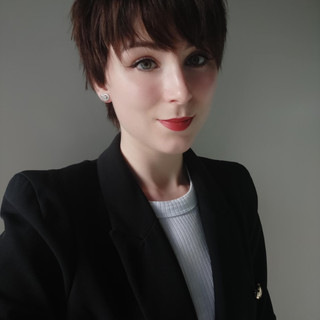

Babs is a strategic advisor specializing in behavioural insights, change, and public service delivery within the Dutch government. After starting her career in the communications sector, she joined the public sector in 2002, working on societal campaigns, policy initiatives, and organizational development. For almost two decades, she has focused on applying behavioural science to public challenges and improving government effectiveness through evidence-based approaches. She co-developed the CASI methodology, a practical framework for applying behavioural insights in public communication and is passionate about bridging the gap between academic research and everyday practice. Since 2014, she has been actively involved in BIN NL, contributing to the further development, professionalization, and dissemination of behavioural insights within the public sector.
Who or what got you into behavioural science?
Originally, I worked in communications. My roots are in advertising, that's where I started my career. That already had a lot to do with behaviour in a way, just not really in my role as an account manager, and definitely not underpinned scientifically.
I actually wanted to study psychology, but at the time, in high school, I thought that meant you could only become a clinical psychologist, so I didn't do it. I made up for that later though. How I really got into it was working at the Dutch government's communications execution agency (DPC), on the big mass media campaigns we ran together with different ministries. Around 2007 my manager wrote a book about psychological insights in government mass media campaigns, and that really inspired me. Around that same period Thaler and Sunstein's book Nudge came out too, and the WRR, an independent advisory body to the government, also published some good work on the topic. That's when I really became interested in the field myself.
Eventually I did a master's in applied psychology, to give more structure to, and deepen, the knowledge I had already gained. I became team lead at DPC Campaign Management and stayed in that role a long time. Now I'm a policy advisor for BI at the Tax Administration.
What is the accomplishment you are proudest of as a behavioural scientist, and what do you still want to achieve?
I worked at DPC, first as a campaign manager, later leading the campaign management team. At that time we talked a lot in government about how we should be doing this, but I wanted something practical for my team. So, the idea came up to build a tool, and honestly, I didn't have much more than a checklist in mind at first. If we had an overview of the literature and a checklist of the right questions to ask, we'd already be a long way there. So that's how we started, together with a university, a university of applied sciences, and our own researchers.
What eventually rolled out was CASI, the Communication Activation Strategy Instrument. It became a lot more than a checklist; we did a literature study and built a process model that's been developed much further since I left DPC. It gave people an anchor: okay, what's your problem, what's the desired behaviour, describe that concretely, and which strategies can you actually use. That was helpful because we saw constantly that a minister would say ‘we need an awareness campaign’, assuming that alone would fix the behaviour, and we were never quite convincing enough about why that wouldn't work. CASI helped us build our case.
When I left DPC I was able to leave the instrument behind with long term budget, and real ownership. I'm proud of that, it's still there, still being developed by my former colleagues. I'm also proud that at Benefits, where I worked as a manager for several years, I managed to set up a small behavioural team just before I left, and that team is still there too and has grown.
I always like to leave something behind that lasts when leaving a job. At the Tax Administration right now we're working on an anchoring plan for using behavioural insights more structurally, and I'd love to help make things like a central team happen there as well. But that’s still a work in progress.
What are the biggest challenges for behavioural science?
The people I know in this field, the behavioural advisors, tend to be very intrinsically motivated. We all feel these insights should be factored into policymaking, into how laws are written, and how taxes are levied for example. It feels so logical to us, and it is fairly widely recognized, at staff level and at leadership level too. But there are so many other things competing for attention that it remains difficult in our daily practice.
I don't think we always succeed as behavioural advisors in producing examples that are convincing enough, especially to decision makers, where the business case often comes down to funding and resources. And a lot of the time it's simply because we don't measure enough, we experiment far too little. We run a pilot, can see that it worked, but we can't always explain why, and that doesn't help make our case. Part of that is a skills and scarcity problem too. And we're all creatures of habit, and there are serious budget cuts going on in government right now, so it's hard to ask people to do extra work that might only pay off later.
Our governmental network, the Behavioural Insights Network Netherlands (BIN NL), is almost entirely made up of people doing this alongside their actual jobs, I've done network activities in my own free time more than once. We've made progress, but if you really want to make a leap you need genuine commitment from leadership, in words and in resources, and that's exactly what these anchoring plans are trying to secure.
What skills would you say are needed to be a behavioural scientist? Any recommendations?
You need people who know the field of BI, behavioural advisors doing root cause analysis, figuring out what behaviour we actually want to achieve, why people aren't doing it, and how we can help them do it. That's the foundation, knowing your craft.
But you have to work together, so you also need to understand the other person's profession and way of working. For example: at the Tax Administration we don't write the tax laws ourselves, that's a different part of the ministry. So, if you want a seat at the table, you need to understand how that process works on the other side, like the political commitments, the timing. An example is the yearly tax plan that gets pushed through in a single year, while legislation normally takes years, so there's no time for long-term research. You have to work within the other party's reality and figure out how you can add value as a behavioural advisor. That takes real openness and curiosity about other people’s perspectives. Fortunately there are plenty of people with these skills in the Netherlands.
How do you think behavioural science/economics will develop in the next 10 years?
It's still a field in development. A lot is happening, but a lot still needs to happen, and it's going to take time and perseverance. I sometimes compare it to communications, the field I came from, which really took decades to reach the position it has in organizations today. I've been working on this topic for almost twenty years now, so in many ways, we’re still only at the beginning.
For about ten years we've had a nationwide network across government departments, which was established following a senior policy roundtable. That's existed since 2014 (the aforementioned BIN NL). Last year we agreed that every national government organization should build its own anchoring strategy, a plan to embed behavioural insight properly so it becomes systematic and carries the same weight as the legal or economic perspective. Those plans have a ten year scope, so I think we'll see real progress over the next decade.
I am optimistic. Partly by nature, partly because I see a lot of people in this field with real motivation to push it forward, not just me, and I think that's exactly what's needed.
What advice would you give to young behavioural scientists, or those looking to progress into the field?
There are quite a few study paths now. You have the traditional universities that historically already taught sociology and psychology, but increasingly with a more applied focus on behaviour change. There are also a number of very successful postgraduate programs in the Netherlands. If you're still a student, I'd say learn as much as you can directly at (an applied) university, because you'll carry that with you. If you're already working and coming from another field of study, like myself, I'd say choose a substantial rather than a light course, because that tends to lack some depth.
I see myself more as a behavioural advisor than an academic behavioural scientist. For example, there are people around me who have great statistical skills, that I don't have. You have to find your own place with your own qualities. I think if you choose a policy area or a company you're genuinely passionate about, you'll thrive. That intrinsic motivation is your foundation, because it isn't always going to be easy. So, find your spark.
What are your biggest frustrations with behavioural science, as it currently stands?
As you've probably picked up, I have a real intrinsic drive to get this work at the Dutch government done, so it can't move fast enough for me. Rationally I know why it's slow, and that it makes sense. But it frustrates me sometimes that it goes this slowly, and that because people change roles you often have to re-explain and re-convince all over again. Usually it evens out, because I've learned to notice and appreciate the small steps, but sometimes it still gets to me.
If you weren't a behavioural scientist, what would you be doing?
I wanted to study psychology, not necessarily in a helping role at the time, but now I probably would have done something in that direction. I look at it differently now than I did as a seventeen-year-old. And I would love to be able to be more creative, like drawing, to be honest.
How do you apply behavioural science in your personal life?
There are simple things I use. Exercise, for instance, I go to the gym three times a week, and I deliberately always go at the same time on the same days. That habitual behaviour really helps me. I don't think about it, it doesn't matter if it's raining or I don't feel like it. The only exception is being sick. And when I want to change something in my daily life, I try to do it in small steps, because I know big leaps just don't hold up.
That said, it's not like I've got it all figured out. When it comes to snacking, unfortunately I have not found the right strategy yet. Humans are fallible, after all.
Which other behavioural scientists would you love to read an interview by?
I thought of Chiara Varazzani. What I find very inspiring about her is that from her position at the OECD, she's really building a community too, also offering practical tools, and I think she's making a real contribution to behavioural insights worldwide with her team.
Thank you so much for taking the time to answer my questions Babs!
As I said before, this interview is part of a larger series which can also be found here on the blog. Make sure you don't miss any of those, nor any of the upcoming interviews!


Comments