Interview with Daniel Cáceres Apolaya
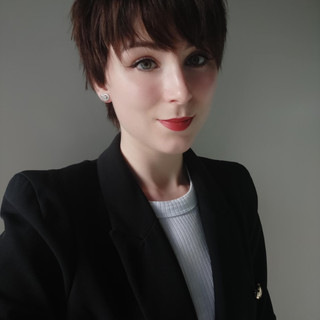

Daniel is an Industrial Engineer and coach, with an MSc in HR & Organisational Behaviour from the London School of Economics (UK). He's passionate about facilitating behavioural, cultural, and technological change among STEM teams and leaders by combining data, design, and behavioural science. He has14 years of multi-industry experience (DIRECTV, Intercorp, Breca, Credicorp) applying change management, agility, learning consulting for reskilling, data analytics, and continuous improvement, managing Operations or end-to-end projects with HR teams. And when he's got some free time he's also a marathonist & trail runner!
Who or what got you into behavioural science?
I'm an industrial engineer, and during my first eight years of experience I worked in supply chain operations and logistics. My curiosity for behavioural science started, though, during my undergraduate degree in Peru, when I did an internship in the Netherlands in 2009, working in a warehouse at Abbott Laboratories doing time studies. I remember I was struggling with inconsistencies in my data and mentioned it to my mentor there, the quality assurance manager. He asked me how I had involved the operators in the study, what I had told them, how I had engaged them. I hadn't done any of that. I had just shown up with my stopwatch. He told me that any optimisation project is only about thirty percent tools and seventy percent people. I was in my early twenties at the time, and it hit me that my engineering degree back in Peru was only really teaching me that thirty percent.
That realisation made me quite critical of engineering as a field of study. Therefore, I started building leadership skills through voluntary roles alongside my engineering path, and I began noticing how much people skills mattered once I was actually leading teams, and how much I was lacking myself. I trained as a coach, and started running workshops on organisational culture and leadership for colleagues and university friends, which I loved. But I noticed I lacked evidence. A lot of what I was reading wasn't genuinely scientific, and I think that was part of why my colleagues from more technical, operational backgrounds weren't as convinced or engaged as others seemed to be. That sent me looking for something else to study, and I found a programme in human resources and organisational behaviour at the London School of Economics. I didn't fully know what I was getting into, but that's how behavioural science became part of my profile. I finished the programme in 2017, went back to Peru, and spent the following years in different corporate roles: three years in learning and consulting, designing learning experiences for managers and executives, then change management roles at two large banks, working on the human side of technical change.
What is the accomplishment you are proudest of as a behavioural scientist, and what do you still want to achieve?
What I'm proudest of right now is where I've landed, working with mining and industrial companies. I've been in that sector for about two years, and what I see there is real budget and a genuine willingness, goodwill even, to think about innovation from a more human perspective rather than a purely technical one. That feels like an important place to be contributing.
This is only the third year of my own consulting firm. The first year I focused on tech consulting clients, and it didn't go particularly well. It's really only been over the last year that I've built strong relationships in mining. So there's still a lot ahead of me, but what I'd love to achieve is helping organisations, and the people inside them, adopt AI well: helping people manage the negative feelings that can come with that kind of change, and helping management communicate through all the uncertainty it brings. That would be a meaningful thing to have contributed to.
What are the biggest challenges for behavioural science?
Starting a behavioural science firm in Peru comes with a specific set of challenges. Corporate organisations here are very focused on numbers, on profit, on return on investment, and talent development usually isn't the first priority. There's also a pattern I've noticed: when companies here do engage with behavioural science or behavioural economics, it's almost always to build better products or services for customers. That's valuable, of course, but the idea that it could also help the internal side of the business, organisational change, technology adoption, tends to get overlooked.
The field also isn't at a stage in Peru where I can market myself as a behavioural scientist and expect people to understand what that means. So I describe myself as a humanistic engineer instead, someone who applies agility, data analytics and behavioural science together, rather than leading with the term itself.
How do you think behavioural science will develop in the next 10 years?
In the corporate world specifically, I'm optimistic, or maybe hopeful is the more honest word. There's a global conversation right now about what's actually left for humans to differentiate ourselves from machines, and I think behavioural science sits right inside that conversation: helping us understand ourselves, and helping us work alongside machines with more wellbeing, not less. I take some hope from a pattern I've noticed elsewhere, how customer experience as a discipline eventually led to employee experience, and how business analytics eventually led to people analytics. I'd like to think behavioural science, in the same way it's already used to build things for customers, eventually becomes something organisations use to think seriously about the wellbeing of their own people too.
What skills would you say are needed to be a behavioural scientist? Any recommendations?
I'd say the main thing, in a good way, is an obsession with looking at the data behind human behaviour. Not everyone is convinced by purely qualitative analysis, so I think the best mix is quantitative and qualitative together, even though you don't always have the data to do that properly. Beyond the rigour, it matters enormously to know your audience, what actually drives the people you're talking to, what they care about. And then making sure your insights, your frameworks and your intervention actually connect into something coherent, rather than just being another nice looking slide that doesn't really go anywhere. That's the difference between something people act on and something that just sits in a PowerPoint.
What are your biggest frustrations with behavioural science, as it currently stands?
My frustration comes from that same obsession with data I mentioned a moment ago. It's often very hard to draw a clean line from behavioural work to return on investment. If you're looking at, say, retail staff and running an AB test on which behaviours drive more sales, that connection is fairly direct and easy to demonstrate. But if you're trying to connect behavioural interventions to the return on investment for a financial analyst or a marketing coordinator, roles where the link to revenue isn't as immediate, I honestly don't know how you'd measure that connection convincingly. I haven't seen good examples of it done well yet.
What advice would you give to young behavioural scientists, or those looking to progress into the field?
I'd strongly suggest starting with books that are properly grounded, not the popular science end of things, but the frameworks and methods themselves, something like Susan Michie's work on the COM-B model. If someone reads that and it clicks for them, I'd be glad to introduce them to people who could help further. I don't think of myself as a pure expert exactly, I'm an humanistic engineer, a hybrid professional, and I'm happy with that. As for whether you need a formal degree, honestly, I don't know the right answer any more. My own degree at LSE was extremely costly, and while I don't regret doing it, education is changing so fast with technology that I have no idea how the value of degrees and certifications will hold up. If you have the means, travelling and learning alongside your peers is an incredible experience, and I'd recommend it. But I've also met people who never did a behavioural science master's and are genuinely excellent consultants working in the human side of organisations. I honestly don't know which route is best any more in the upcoming future, and I don't think there's one answer.
Do you apply behavioural science in your personal life?
Yes, definitely, I think it's important to be coherent and actually live it, to help with our decision-making or to recognise other people's tactics to influence our decisions too. For instance, I notice how companies, such as retailers, strongly use tactics to influence consumer behaviour, and I have fun because I notice the intention behind it. I also use the Easy principle from the EAST framework in my own life, such as when training for marathons. I keep my running watch and my kit right next to my bed, so there's as little friction as possible to actually get up and go. I think everything's connected in that way.
Which other behavioural scientists would you love to read an interview by?
Carlos Hoyos would be one; he was actually my first mentor in Peru in this field, a really smart, generous person, though I believe you've already spoken to him. Someone else worth talking to is Ernesto Ychikawa. He hasn't studied behavioural science formally; he's an industrial engineer like me, and he does great work in the change management field with a human-centric approach. Those would be my recommendations worth speaking to.
Thank you so much for taking the time to answer my questions Daniel!
As I said before, this interview is part of a larger series which can also be found here on the blog. Make sure you don't miss any of those, nor any of the upcoming interviews!


Comments