Interview with Priya Fabian-Gill
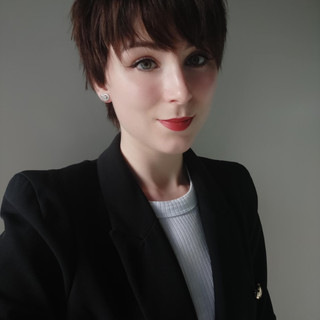

Priya Fabian-Gill is a Behavioural Science Lead at MoreThanNow, a London-based behavioural science consultancy. She designs and runs randomized controlled trials for organisations across the financial services, pharma, professional services, telecoms, and engineering industries. Her research brings rigorous causal inference to questions of workplace culture, experience, and performance, favouring best evidence over best practice. Priya holds an MSc in Behavioural Science from LSE and a BSc in Psychology from Harvard.
Who or what got you into behavioural science?
I refused to take AP psychology in high school because it was considered the easy option, which feels pretty cringe in retrospect. I went on to study classical languages in college, Latin and Greek, and enjoyed the linguistics side of it, the almost mathematical logic of grammar and syntax, but eventually realized I wasn't happy with what I was studying and took two gap years, which is unusual in the middle of a degree.
During that time, while I was also struggling with my mental health, I picked up books on psychology and behavioural science lying around the house, starting with Thinking Fast and Slow and then onto several others, and it was genuinely inspiring to discover there could be a pragmatic, scientific approach to the things I was navigating. When I went back to college I switched my major to psychology, and ended up working in a behavioural lab at the business school with Ashley Whillans, whose research on time, money and happiness completely reoriented my values toward well-being. She became such a formative mentor that, without her, I don't think I'd have stuck with the field. From there I applied to BIT, bombed the interview, and applied for a master's at LSE instead, which I loved, not least because the US doesn't offer nearly as much formalized training in behavioural science.
What is the accomplishment you are proudest of as a behavioural scientist, and what do you still want to achieve?
I'm really proud of the quantity and quality of randomized controlled trials we've designed, delivered and analyzed at MoreThanNow, and the impact they've had. In two and a half years there, the range of what we've worked on has grown a lot, everything from fostering inclusive culture and experiences, to creating transparency in supply chain risk, and more recently driving data declaration rates inside a bank. We've also expanded the range of industries we work in. When I first joined we were largely working with big pharmaceutical companies, Novartis and AstraZeneca among them, and we've since been able to establish more of a foothold in banking, R&D, and tech companies. It's been good to see us play a role in helping these organizations adopt a more scientific mindset toward change.
What I still want to achieve is to embed that approach at scale rather than in silos. We often start a project on one specific issue, inclusive recruitment, say, and expand from there into culture, leadership and learning and development, and that's worked well with some partners, but not all. Our fundamental aspiration is to build a genuine mindset of experimentation inside these organizations, to the point where they don't really need us any more after a few years. That will take a long time. We work closely with maybe fifteen to twenty companies right now, and there are plenty more who we want to bring on board, so a big part of the next few years is figuring out how to make the case in a way that actually resonates.
What are the biggest challenges for behavioural science?
One of the biggest challenges is what I'd call the zeitgeist problem. A couple of years ago the hot topic was inclusion, now it's AI, and while both still matter, there's a real risk of a behavioural scientists scrambling to reshape our value proposition around whatever is fashionable that financial year. I think it's honestly a bit of a pipe dream to imagine we'll ever fully escape that -- organizations will always have a hot topic, so what we try to do instead is give real credence to something like AI, because it does matter, without letting it crowd out airtime for the other challenges that are still quietly going on in the background.
The other big challenge is around designation, holding on to behavioural science as a distinct discipline. As it becomes more embedded everywhere, we run the real risk of people believing they're behavioural scientists because they've done a training session, or of organizations telling us that they already know how humans work, or that they don't need to experiment because they have plenty of institutional experience already. The more that happens, the more people stop recognizing that there's a genuinely unique skill set behind this work, and that's one of the more frustrating doors to get through.
What skills would you say are needed to be a behavioural scientist? Any recommendations?
I didn't fully appreciate how much consulting the job would actually involve. I arrived with the standard behavioural science toolkit, knowing how to run an intervention, how to analyze it, the relevant frameworks, biases and heuristics, but that alone wasn't enough. The skills I've had to build since are really about storytelling, distilling what we do into the simplest possible narrative, not because our audience can't handle complexity, but because they don't have time for it. So much of the job now is storytelling.
Relationship management matters just as much. I didn't expect how much of the role would be about relationships, being genuinely in a partner's corner, because bringing experimentation into a traditional organization involves real vulnerability and risk-taking on their part, and that needs constant support. The last piece is being able to straddle the academic and applied sides of the work. One of our academic collaborators, Dr Edward Chang at Harvard, has talked about how even academic behavioural science has shifted away from isolating one tiny variable at a time toward accepting a bit less certainty about exactly what drove a result, in exchange for actually delivering change faster. Being able to explain that trade-off to a stakeholder who has a PhD in a hard science, and is a little uneasy that we've changed more than one thing at once, is its own skill.
How do you think behavioural science and economics will develop in the next 10 years?
I think we need to be far more deliberate architects of where the field goes over the next ten years, rather than just letting it happen to us. The first thing is getting better at tying what we do to real commercial value. Because we're scientists by training, a lot of us who work in applied behavioural science struggle to connect our work to the bottom line, and I'd love to see us become better storytellers so that we're seen as a necessary spend rather than a nice-to-have innovation.
The second is that we need to be doing far more rigorous experimentation on AI tools, not just adopting them. I was at a conference recently where a group of people from large financial services organizations admitted they were rolling AI tools out on a tight deadline and would evaluate them afterwards, even though we already know women use AI less than men, which risks widening existing gender gaps in representation and pay. I'd like behavioural science to be asking those questions properly before the tools go out, not after, things like whether people actually feel good using them, whether they use them in the right ways, whether they grow from them.
And finally, my hope is that we stop chasing whatever the current zeitgeist topic is. Inclusion still matters, well-being still matters, AI matters too, and ideally our value proposition would stay steady rather than being rewritten every time the conversation moves on to something new.
What advice would you give to young behavioural scientists, or those looking to progress into the field?
Start small. You can be a behavioural scientist without that being your official title, and there just aren't many roles explicitly labelled behavioural science, so it's worth finding a smaller company where you have the flexibility to shape your own role. That's essentially what happened to me at OpenNotes, my mentor, Om Lala, created a role for me because he knew I was an aspiring behavioural scientist. Failing that, be prepared for a lot of rejection, and be gentle with yourself about it. I had roughly a two percent success rate when I was applying for jobs, and the market has only gotten harder since. Nobody lands every role they go for, and it takes a real emotional toll to feel like you're not good enough just because a particular job didn't work out. Don't hold out for the perfect first role either, healthcare wasn't really my passion, but taking that job gave me the footing to eventually land something I actually wanted.
One more thing I'd add, especially now, is to be careful with AI in your applications. When I'm screening CVs and cover letters, I'm actually looking for the occasional typo, because when something reads as too polished it makes me suspicious. Use AI to sense check your writing or give you isolated feedback, not to write it for you, and definitely don't lean on it for interviews or case tasks. When you're interviewing several candidates, answers that have all converged toward the same AI-flavoured recommendations are pretty easy to spot, and if it's a role you actually want, the employer wants to know what's in your mind, not the model's.
What are your biggest frustrations with behavioural science, as it currently stands?
My biggest pet peeve is a stubborn, wholesale reliance on frameworks. If we reduce the field to a neat acronym, we lose the ability to convey how sophisticated the actual work is, and we risk blending into generic management consulting rather than standing apart from it. I'd love to see more behavioural science consultancies whose teams can genuinely run experiments, not just teach a framework and move on, even though the upfront cost of landing projects that way is higher.
I also think that sometimes behavioural scientists create output that is over-complicated rather than genuinely useful, dressed up to look impressively scientific without much thought for the specific, granular detail needed to actually drive change. Something that should have been simple gets made complicated in a way that doesn't help stakeholders actually act on it.
If you weren't a behavioural scientist, what would you be doing?
I'm genuinely obsessed with the quantitative side of my work, to the point that as soon as a client data set lands, my sense of work-life balance disappears. I could easily see myself in data science or software engineering; I love the syntax of code the same way I love languages generally. Architecture has always appealed to me too, clean lines, symmetry, that kind of order. I've recently taken up ceramics and find it genuinely meditative, not least because I can't touch my phone while I'm doing it, so that’s one potential avenue. My less serious answer is post-apocalypse dog-sitting, assuming there are still dogs around.
How do you apply behavioural science in your personal life?
There's a real irony that a lot of behavioural scientists apply their own principles poorly to their own lives, and I'm no exception. I still can't get myself to wear my retainer every night even though it's such a small thing to embed into a routine. Where it has genuinely worked is temptation bundling. I've always been bad at responding to messages, and I finally cracked it by having the TV on in the background while I do it. It suddenly feels like leisure rather than a chore. I do the same thing with exercise, an episode playing while I'm on the treadmill or the bike, and even with chores like laundry, where my laptop just moves around the house with me. I also try to build in accountability by getting my husband to take on habits alongside me, with mixed success at best.
Which other behavioural scientists would you love to read an interview by?
Logan Ury is the Director of Relationship Science at Hinge, and before a behavioural scientist at Google, and I'd love to know more about how behavioural science actually gets used inside a dating app (hopefully for good!). I'm also a big admirer of Maya Shankar. Ashley Whillans, my mentor , would be a brilliant interview too. Beyond people with the formal title, I'd also point to a few partners doing genuinely behavioural work on the inside without the label: Juilitta Sofat at Nationwide, Jackie Beer at Worley, and Kelly Tobin at British Telecom, previously at Citi, all of them bringing a proper behavioural science lens to the work without necessarily calling themselves behavioural scientists.
Thank you so much for taking the time to answer my questions Priya!
As I said before, this interview is part of a larger series which can also be found here on the blog. Make sure you don't miss any of those, nor any of the upcoming interviews!


Comments