Interview with Xavier Genot
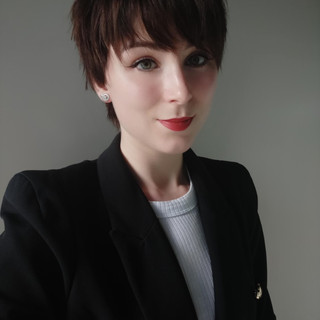

Xavier leads Nudge Consulting, a behavioural science boutique he founded in 2025, having previously run BVA Nudge Consulting's LatAm arm from 2018 and, before that, founded Recursos Límbicos in 2009, the first behavioural consultancy in Latin America; his clients span banking, infrastructure, startups, health and FMCG (including Santander, Falabella and Natura) as well as public bodies and NGOs across Chile, with a focus on behavioural design, behaviour change, compliance and sustainability. He has also served as president of the Chile Nudge Foundation since 2018, teaches Applied Behavioural Sciences at Universidad de Chile, hosts the webinar Conversaciones Comportamentales, and lectures across five major Chilean universities. Loving the interview series? They have now been turned into a book! Order it here.
Who or what got you into behavioural science?
I wasn't originally headed toward behavioural science. I was a consultant working across infrastructure, real estate and tourism, and at one point I became something of a specialist in parking lots. I was doing a market study for one and I knew the job well enough that I rarely got my income forecasts wrong, but this particular lot was pulling in about half the traffic I had expected. I checked my numbers, compared it against similar lots nearby, and none of it made sense.
At the same time (2008), I read an article about Barack Obama's first campaign mentioning that his team included behavioural scientists and social psychologists, people like Thaler, Kahneman and Cialdini. I had no reference point for any of that. What caught my attention was that they were doing something completely different from what I knew from political campaigns: rather than the usual go and vote, use your right message, they were building on FOMO, telling people that this particular election was one where every single vote would genuinely count. I started buying every book I could find on social psychology, behavioural economics, neuroscience, ethology, sociology, even evolutionary biology, and took what courses I could find online. There was no formal training available at the time, this was before the Behavioural Insights Team even existed, so I built my own methods as I went.
That reading gave me the answer to my parking lot problem. Drivers are on system one, on autopilot, and they do not have time to process information. The lot had none of the archetypal cues people rely on, like a barrier arm showing whether a car will actually fit, so people could not make the decision fast enough and drove on elsewhere. We fixed that, and it changed the lot's income. That was the moment I realised this was worth pursuing, and I founded my first consultancy, Recursos Limbicos (Limbic Resources), in 2009, which turned out to be the first behavioural consultancy in Latin America. In 2017 I joined the BVA Group to set up their Nudge Consulting practice here, which I led until last year, and this year I started a second venture, Nudge Consulting, with a colleague named Christian. My way into behavioural science has always been from the ground up rather than from theory. I had to go back afterwards and get properly read on the academics, the papers, the theories, so I would know what I was building on, but I am still far more interested in how you use this than in how you construct it.
What is the accomplishment you are proudest of as a behavioural scientist, and what do you still want to achieve?
The project I am proudest of, and the first big one, was for a private clinic that had grown fast with a complex layout, several different architectural phases bolted together. Patients could find the parking lot fine but got lost once they were inside, and the clinic had already changed its signage system three times without it helping. Working with a cognitive psychology PhD I partnered with, we developed a framework looking at three dimensions of how people navigate: the rational, the emotional, and the cognitive, meaning how the brain actually processes the space. The core finding was that people in a clinic are almost never in a good state for learning a new environment. They are stressed, watching the clock, worried about a friend or an operation, which is why people who visited often did not know the building any better than people who barely visited at all. So we built a solution around unconscious cues instead of more signage: a literal painted road through the building in a distinct colour, because once you are on a road you follow it without consciously deciding to, backed by staffed information points along the way. We also learned people wanted to talk to a person, not read a sign or a tablet. It worked very well, and the relationship kept paying off. About two years later the same client mentioned a recurring problem with blocked pipes from people flushing paper towels down the toilet. Instead of an expensive plumbing overhaul, we simply moved the waste bin somewhere more visible, and the problem went away.
The other project I am proud of was for Falabella, a large retail company here, on over packaging in their e-commerce operation. It is a five-sided problem: more material use, a worse carbon footprint, higher logistics cost, lost productivity from oversized boxes, and a brand image problem, customers photographing a small item in a needlessly large box and posting about how unsustainable that looked. The packers themselves were mostly students on holiday jobs with about twenty percent monthly turnover, so training was never going to be a realistic fix. The underlying issue was that humans are simply bad at judging volume, so we built a physical reference tool, the three smallest box sizes stuck together at each packing desk, so a packer could tell at a glance whether an item would fit the smallest box. Packers with no experience using the tool were only two seconds slower per package than experienced staff working without it and used the smallest available box in seventy percent of cases against fifty percent for experienced staff without the tool. No AI involved, just a genuine understanding of the human context of the task.
What I still want to achieve is a harder question for me to answer honestly. I am sixty-two now, seventeen years into this, and I would call myself a low achiever in the sense that behavioural science more broadly proving itself here has felt out of reach for me to fix single handedly. So these days I have narrowed my focus to something I can actually move. I lead the behavioural compliance working group at our local Compliance Officers Association, and we are building training that introduces behavioural ideas in small, practical doses rather than one big lecture people forget within two hours. When we build that material we are careful not to lean on names like Max Bazerman or Francesca Gino for authority, Gino's dishonesty research in particular has run into serious retraction and misconduct findings in recent years, so we would rather keep the training grounded in practical results than borrow credibility from citations that might not hold up.
What are the biggest challenges for behavioural science?
What I have learned is that you cannot sell behavioural science itself, certainly not here in Latin America. People are solution focused. They do not want to get more knowledgeable, they want something that works, quickly. Mention a six month research project and most clients want an answer by next month, if not tomorrow. So I stopped selling behavioural science and started selling I can fix that problem instead, and let clients discover the thinking behind it gradually, project by project.
That also means the usual consultancy model, one client here, one client there, is inefficient, because so much of the value is in genuinely understanding an organisation: what is actually important to them, what is true in what they tell you, and what is even truer in what they do not say. I have become much more interested in working constantly with the same organisation rather than spreading across many, because otherwise you lose an enormous amount of time simply relearning context each time.
The other constraint is methodological. Academics feel they cannot run a project without a randomised controlled trial, and in seventeen years of practice I have never been able to run one. Most of my clients have sixty to a hundred people, nowhere near the volumes you would need for a meaningful effect size, and nobody here wants to explain why half their staff got a worse experience for the sake of a trial. So we use quasi experimental methods instead: AB testing where the context is digital, pilots elsewhere, measuring before and after or comparing across sites. It is a non negotiable part of the work, you have to test it in the real world in the best way you can, but we survive perfectly well without RCTs.
What are your biggest frustrations with behavioural science, as it currently stands?
My real frustration is that behavioural science has not proven itself here, has not earned a settled place in management's toolkit. You cannot study it in Chile, so anyone who wants formal training has to leave the country, and once they leave they often do not come back, or not for a long time. And where it is being used, it is mostly invisible. Our tax administration has been using behavioural science for about seven years, but they will not say so publicly, because they are afraid of being accused of manipulating people. So a country that could genuinely be an opinion leader in this space instead keeps it hidden, and that makes it very hard to bring into the mainstream.
What skills would you say are needed to be a behavioural scientist? Any recommendations?
I would say humility and curiosity are the foundation, and I think those are things you largely arrive with rather than acquire later. It is very easy, and I think AI reinforces this, to assume that everything worth knowing is already on the table. I firmly believe the interesting things are what is not on the table, what is implicit rather than evident, and my best results have come from putting a finger on exactly that. I use AI constantly for research, but when I ask it directly for solution ideas, what comes back is always roughly what a very junior behavioural scientist would suggest. The other thing that matters is staying focused on genuinely making things better for people, rather than on making more sales or making a company look healthier, because that is an easy focus to lose. The theoretical depth, knowing the academics, the papers, the years, the frameworks, comes later, and it takes real years of study and experience to build. But it does not work without the humility and curiosity underneath it, and that part is much harder to acquire if you do not already have it.
What advice would you give to young behavioural scientists, or those looking to progress into the field?
For anyone in Latin America wanting to get into this, I do not think founding a standalone behavioural science consultancy is the right route, it is genuinely difficult to sell here on its own terms. What I would recommend instead is getting into a function, customer experience, HR, marketing, sustainability, insights, and using behavioural science as your edge inside it. Having that background makes you something close to a superpower in those roles. I do not know a single company here with a dedicated behavioural science unit, so sector by sector integration is the realistic path, not a standalone discipline.
In practice, three verticals have actually worked for me here. One is optimising communication, because we do not just want to give people information, we want to give them the behaviour itself. There is a line from Rory Sutherland along those lines, that if you give people information to change behaviour they probably will not, but if you give them the behaviour they will find the reasoning for it afterwards. The second is sustainability, where almost every challenge implies a change in behaviour somewhere. The third, more recent for me, is behavioural compliance. Alongside that I have also moved away from thinking in single narrow nudges, which was always the classic approach at BVA Nudge Consulting, a narrow behavioural challenge, the narrowest target possible, toward aiming to behavioural system design: thinking about a client's or a user's whole journey, the sum of interventions across it, and watching for the spillover effects and feedback loops that a single isolated nudge will never show you.
Which other behavioural scientists would you love to read an interview by?
Cialdini is probably the one whose work I use most day to day. Persuasion and social psychology give me more to work with in my kind of practice than behavioural economics does. Ariely was the one who first opened my mind to the field. Beyond them I would point to Gigerenzer, Kahneman and Thaler obviously, and Lisa Feldman Barrett, whose work on emotion I find genuinely important. I have also got a lot out of the Heath brothers, Chip and Dan. I am honestly not sure they would call themselves behavioural scientists, but their thinking has shaped how I think about emotion and behaviour change, along with Jonathan Haidt, though his recent work on social media and young people is not something I work in myself. On people actually working in the field today, I would recommend Richard Chataway (someone I have worked with directly) and James Elfer, whose work I find excellent y truly inspiring.
Thank you so much for taking the time to answer my questions Xavier!
As I said before, this interview is part of a larger series which can also be found here on the blog. Make sure you don't miss any of those, nor any of the upcoming interviews!


Comments